

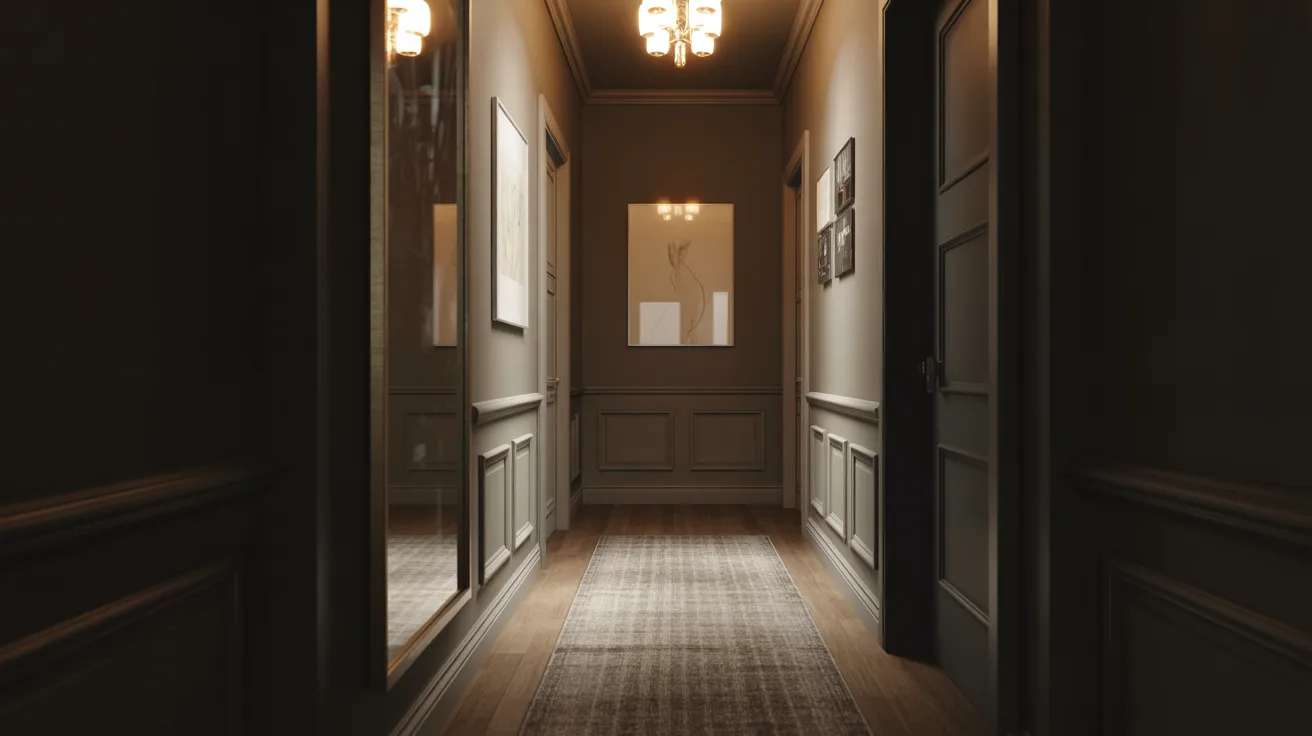
Narrow dark hallways make your home feel cramped and uninviting. Poor lighting and tight spaces only make things worse.
But I’ve got good news for you. These narrow dark hallway ideas will fix your problem without breaking the bank.
I’ve helped many homeowners tackle this exact issue, and these solutions really work. You’ll learn about paint colors, lighting upgrades, mirrors, runners, artwork, and smart storage.
No major renovations needed.
Let’s turn that forgotten hallway into a space you’re proud to walk through every day.
Why Narrow Dark Hallways Need Special Attention
Narrow dark hallways present specific challenges that regular rooms don’t have. The lack of natural light combined with limited width makes these spaces feel closed off and unwelcoming.
But the good news is that you can fix these issues without tearing down walls or spending thousands of dollars. The right combination of color, light, and smart design choices opens up even the tightest spaces.
These 15 ideas work together to create a hallway that feels brighter, wider, and more functional.
Simple Ways to Brighten and Widen Your Hallway
A narrow dark hallway doesn’t have to stay that way. Small changes make a big impact.Here are 15 ideas that will help you create a hallway that feels welcoming and functional.
1. Choose Light & Bright Paint Colors
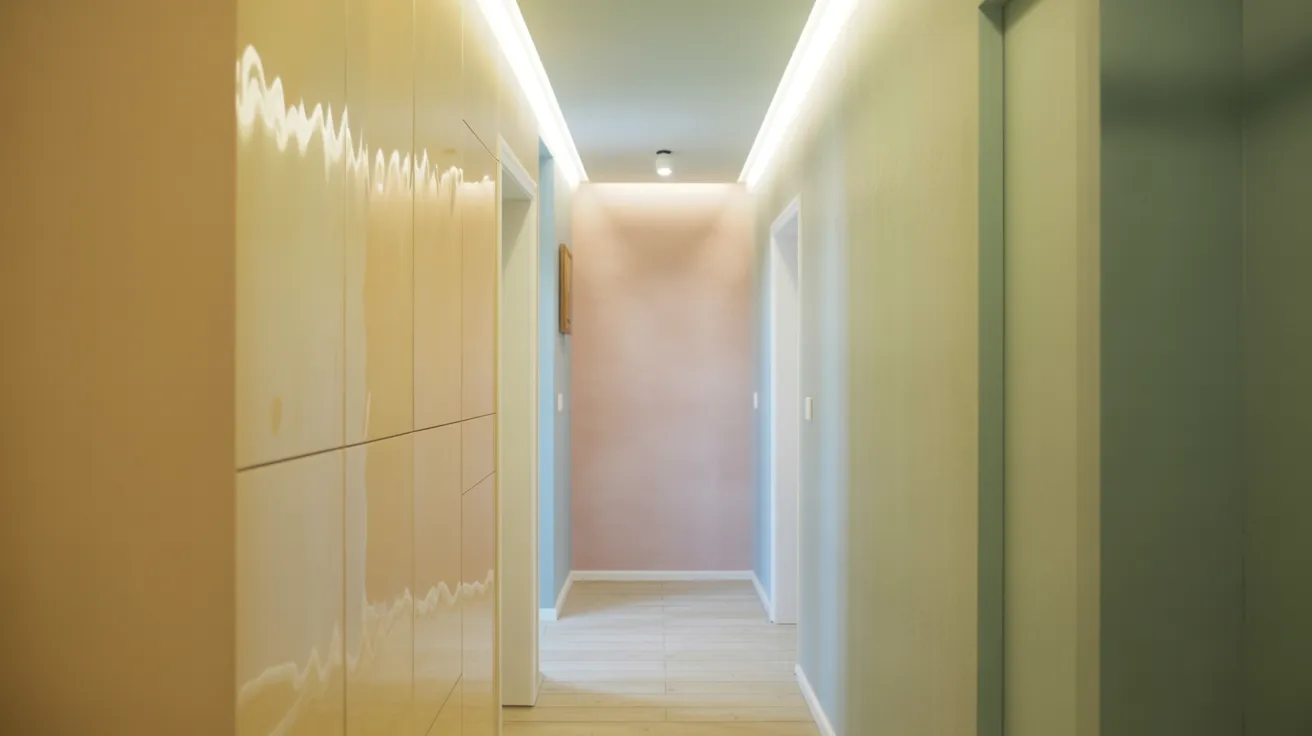
Light paint colors reflect natural light and make narrow hallways feel more open and airy.
Why It Works: Light-colored walls bounce light around the space. This creates an illusion of width. Dark colors absorb light and make hallways feel even smaller. Pale shades work like magic for tight spaces.
Suggested Shades: Go with whites, soft creams, or light pastels. Warm beiges and cool grays also work well. These colors keep the space feeling fresh and open. Stick to matte or eggshell finishes to avoid harsh glare.
2. Install Board and Batten or Wainscoting
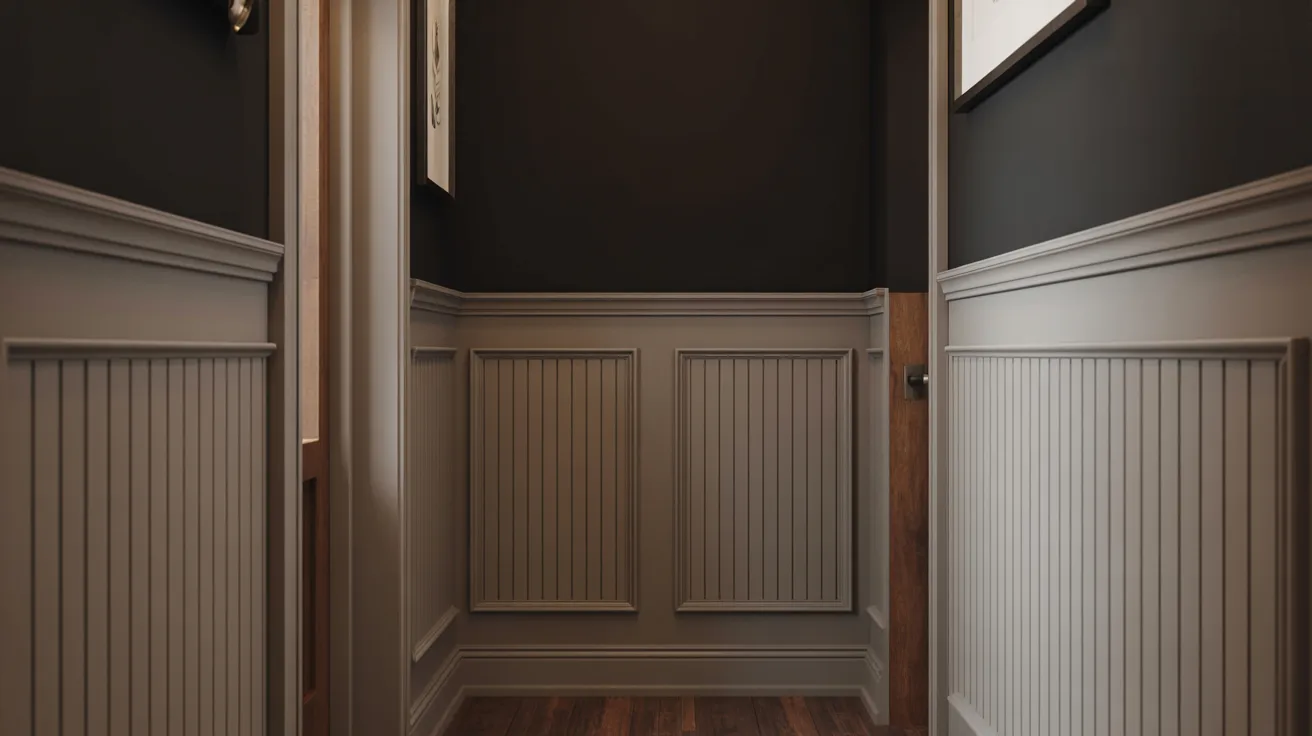
Adding wall paneling creates visual interest and breaks up long, plain walls without taking up floor space.
Visual Interest: Long, blank walls can feel boring and tunnel-like. Board and batten or wainscoting adds texture and depth. This breaks up the monotony and gives your eye something to focus on.
Placement Tips: Keep wainscoting around 36 inches high in narrow halls. Going higher can make the space feel shorter and more cramped. Paint it the same color as your walls for a seamless look.
3. Upgrade Lighting Fixtures
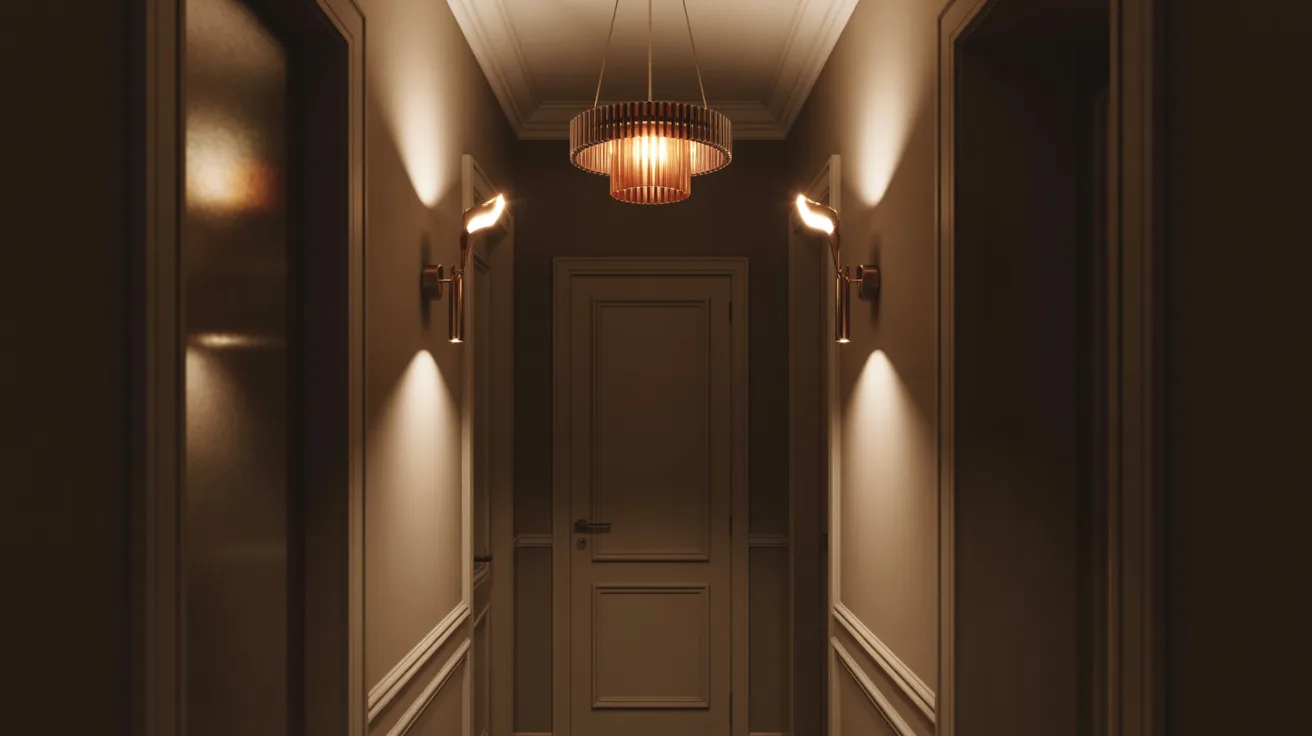
Better lighting instantly makes dark hallways brighter and more welcoming while adding style.
Pendant or Statement Lighting: A well-placed pendant light draws your eye upward. This creates the feeling of more vertical space. Choose fixtures that don’t hang too low in narrow hallways.
Wall Sconces: If your hallway is wider than 3 feet, wall sconces work great. They provide soft, ambient light without taking up ceiling space. Place them at eye level for the best effect.
4. Use Mirrors to Open the Space
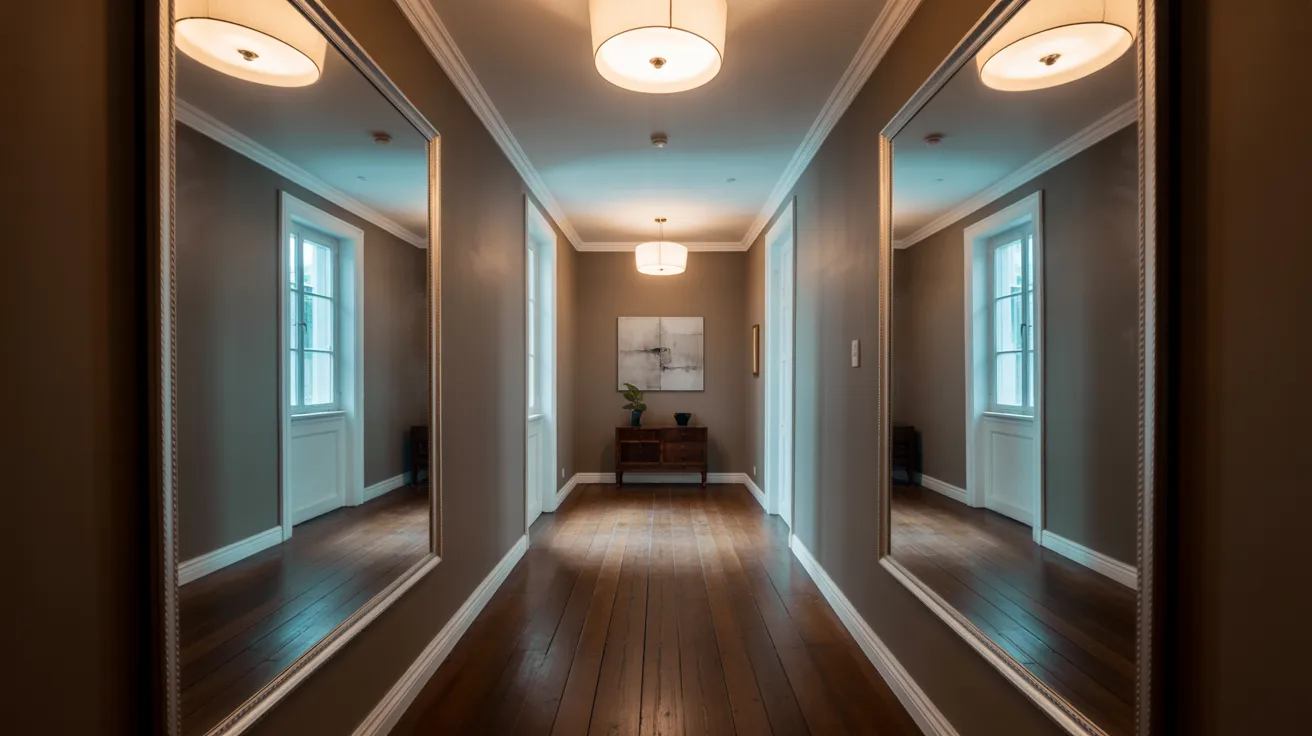
Mirrors reflect light and create depth, making narrow hallways appear wider and brighter instantly.
Reflect Light: A well-placed mirror can double the amount of light in your hallway. It bounces natural light from nearby windows or artificial light from fixtures. This simple trick makes the space feel less confined.
Placement Strategies: Hang mirrors across from artwork or windows. This creates visual balance. You can also line one long wall with mirrors to add serious depth. Just avoid placing mirrors directly opposite each other.
5. Add a Stylish Hallway Runner
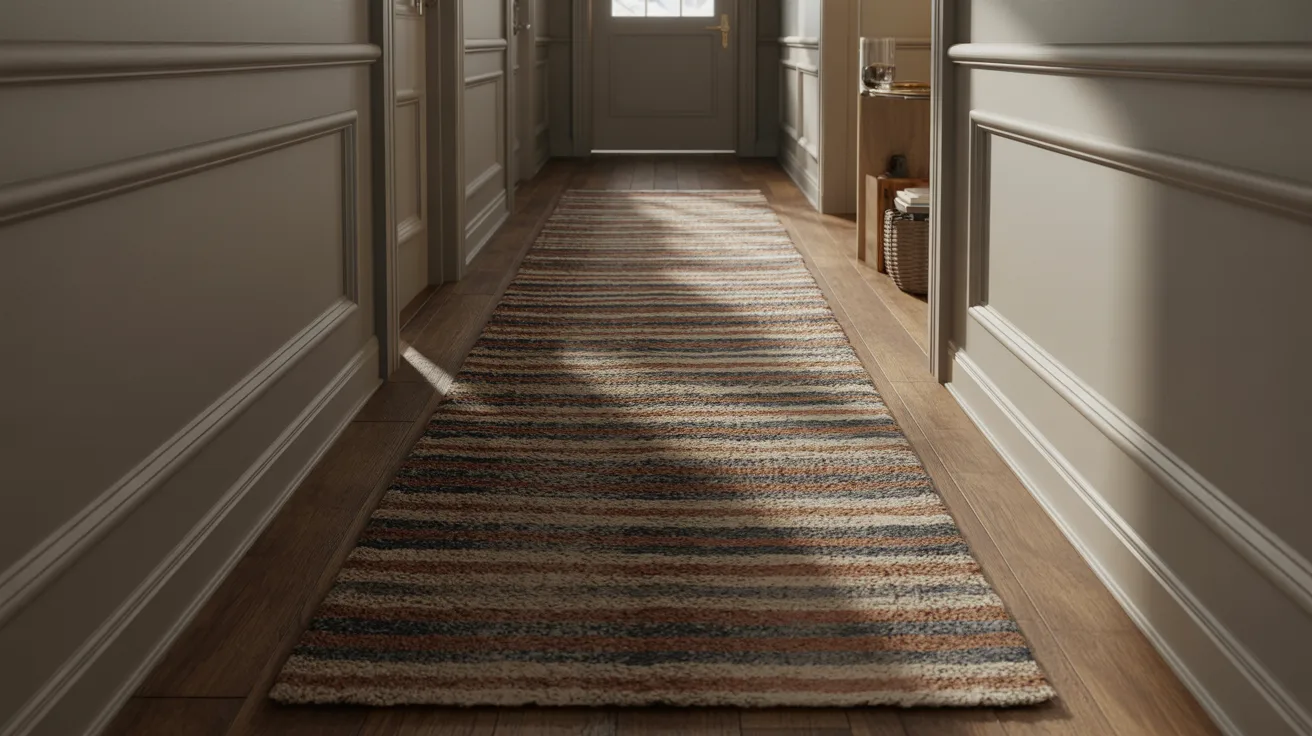
A runner rug adds color, pattern, and comfort while making narrow spaces feel more intentional and designed.
Patterns and Colors: Horizontal stripes make hallways appear wider. Bold colors and patterns add personality without permanent commitment. Just make sure the scale fits your space.
Material Options: Wool runners are durable and feel great underfoot. Indoor/outdoor rugs hold up well in high-traffic areas. Synthetic options offer easy cleaning and long-lasting wear.
6. Display Artwork or Family Photos
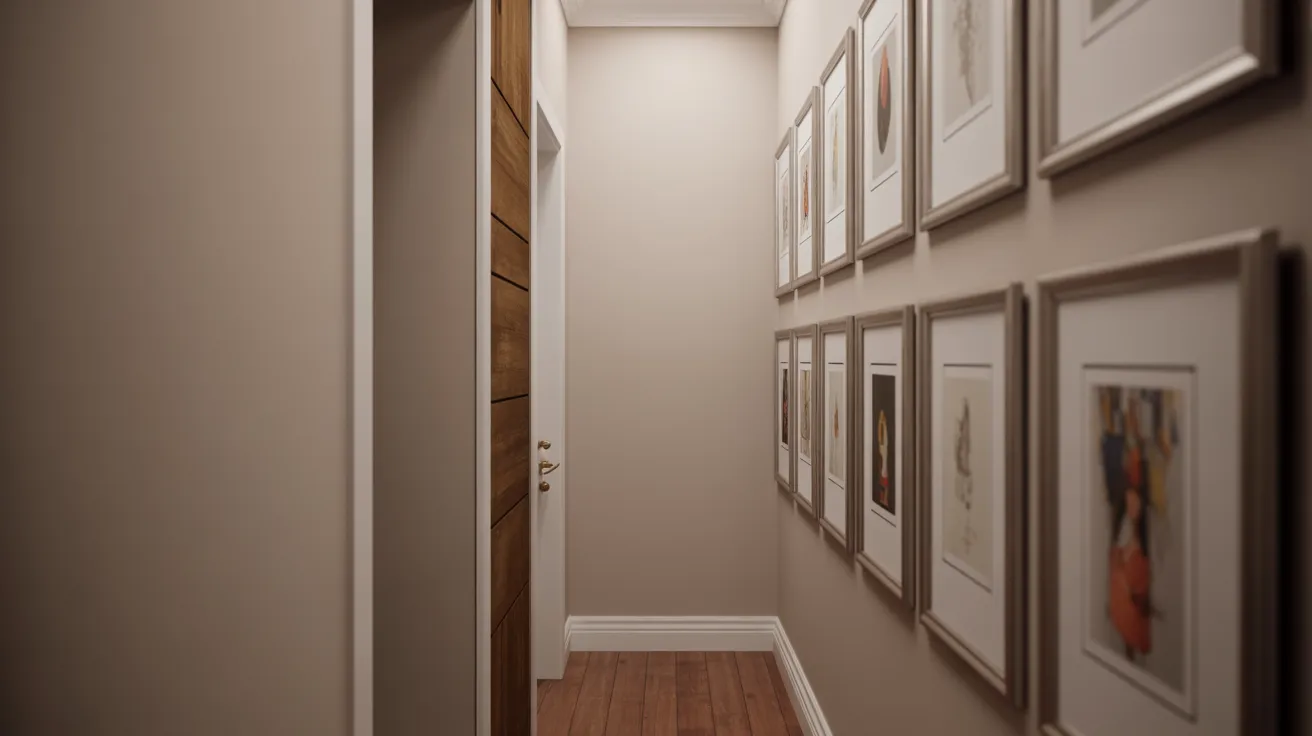
Wall art adds personality and creates visual interest without taking up valuable floor space.
Gallery Wall Ideas: Group frames in matching styles for a cohesive look. Keep spacing consistent between pieces. Stick to one or two frame colors to avoid a cluttered feel.
Single Large Piece: One big piece of art makes a strong statement. It keeps the look clean and simple. This works especially well in very narrow hallways where multiple pieces might feel overwhelming.
7. Refresh Doors & Hardware
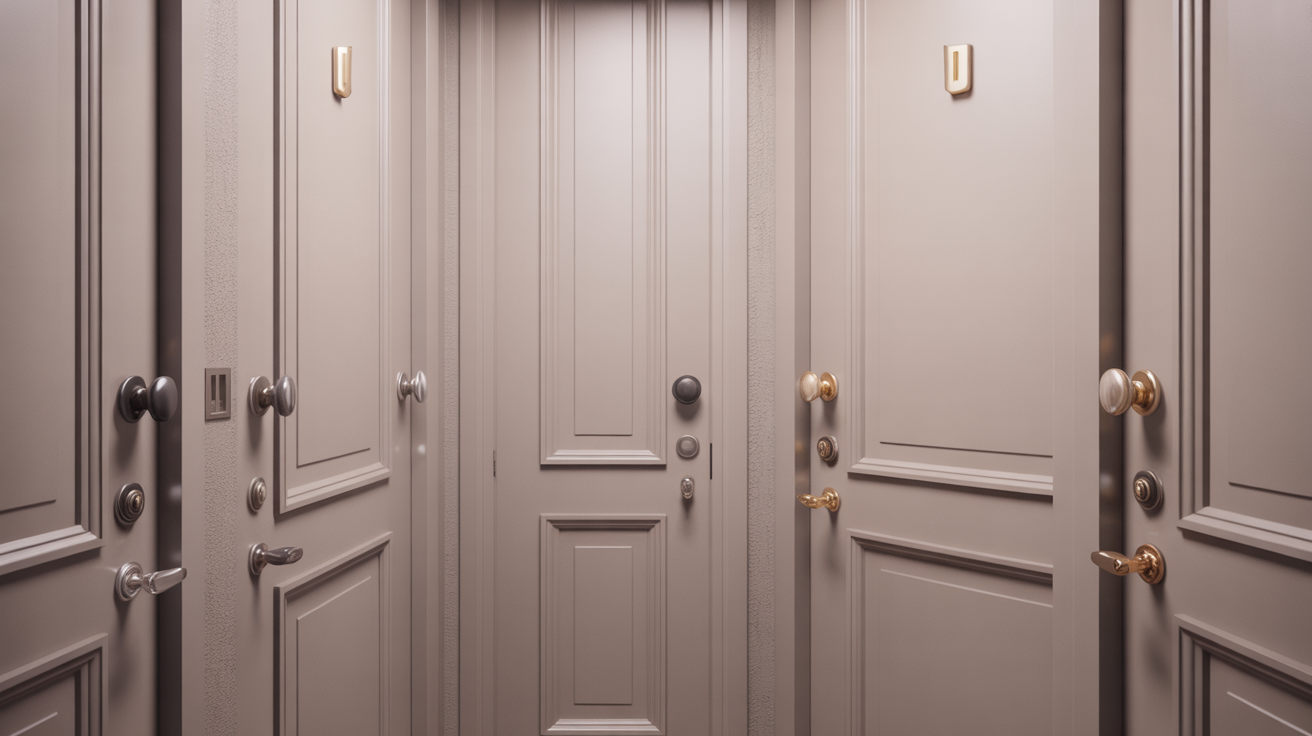
New doors and updated hardware create a polished, cohesive look that makes the whole hallway feel newer.
Matching Doors: When all doors match in style and color, the hallway looks intentional. Paint them the same shade as your trim for a seamless appearance. This creates visual flow.
Stylish Knobs & Handles: Swapping out old hardware is quick and affordable. Choose finishes that match your home’s style. Matte black, brushed brass, or chrome all work well.
8. Beautify Ceiling Features
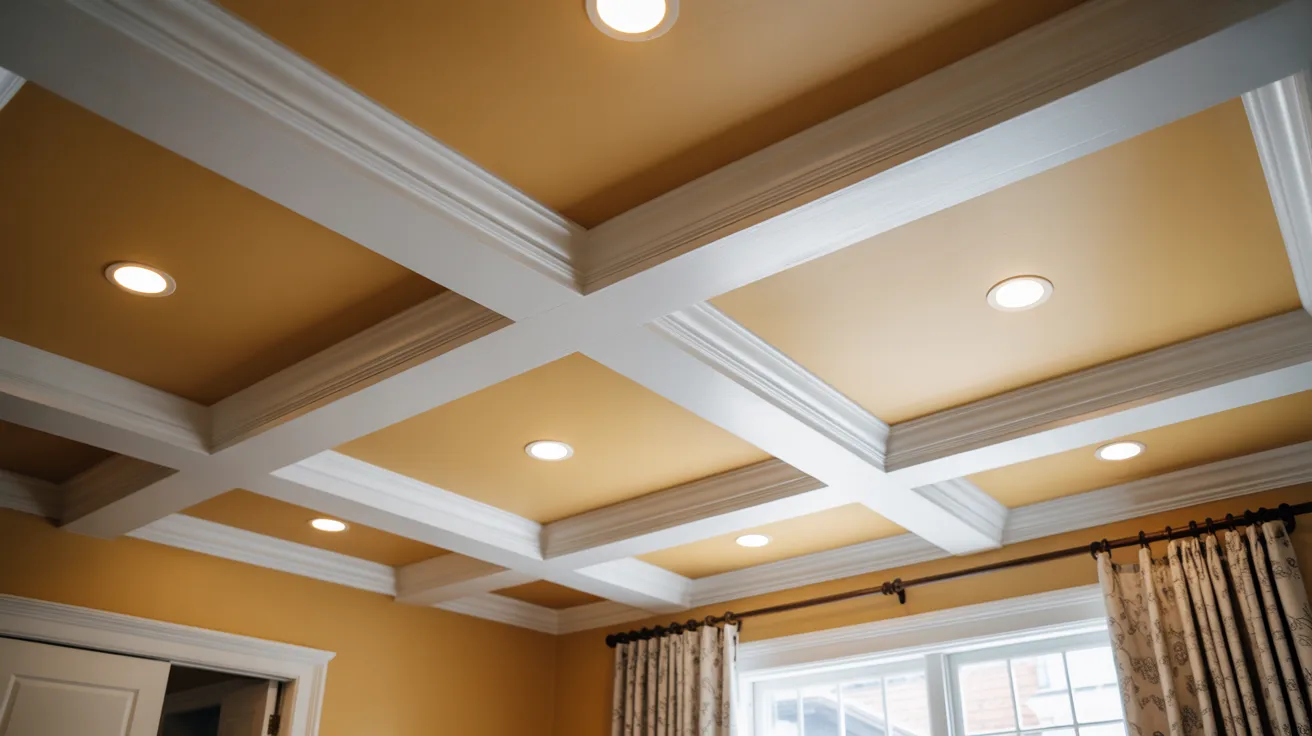
Don’t ignore the ceiling. Small updates here add character and draw eyes upward.
Attic Access or HVAC Returns: Paint access panels the same color as your ceiling. Add trim around them for a finished look. Small decorative hooks can disguise functional elements nicely.
Add Beams or Coffers: If you have the ceiling height, add decorative beams. Coffered sections create depth and architectural interest. Paint them a shade lighter or darker than the ceiling for definition.
9. Incorporate Interior Windows or Frosted Glass
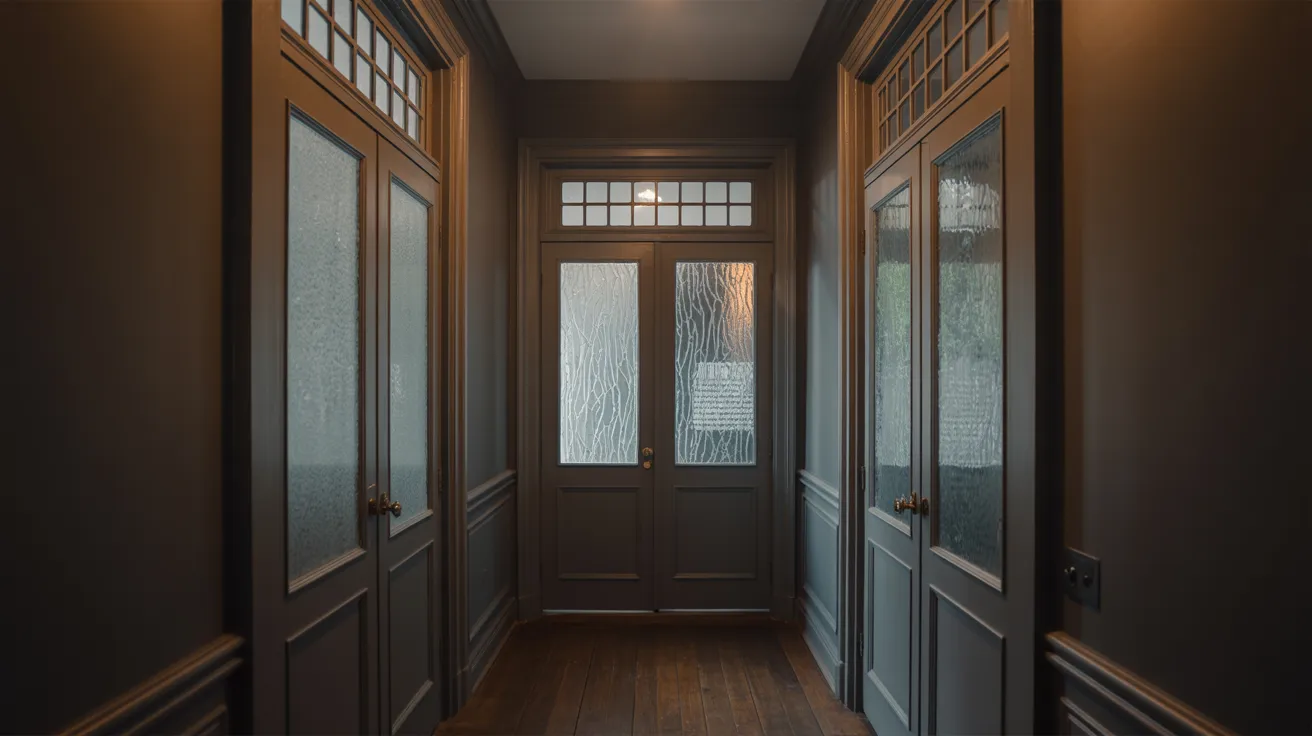
Borrowing light from adjacent rooms brightens hallways naturally without major construction.
Borrow Light: Interior windows let light flow from one room to another. This brightens dark hallways significantly. Transom windows above doors work especially well for this purpose.
Maintain Privacy: Frosted or textured glass provides light without losing privacy. This works great for hallways near bathrooms or bedrooms. You get brightness without exposing private spaces.
10. Use Functional Storage
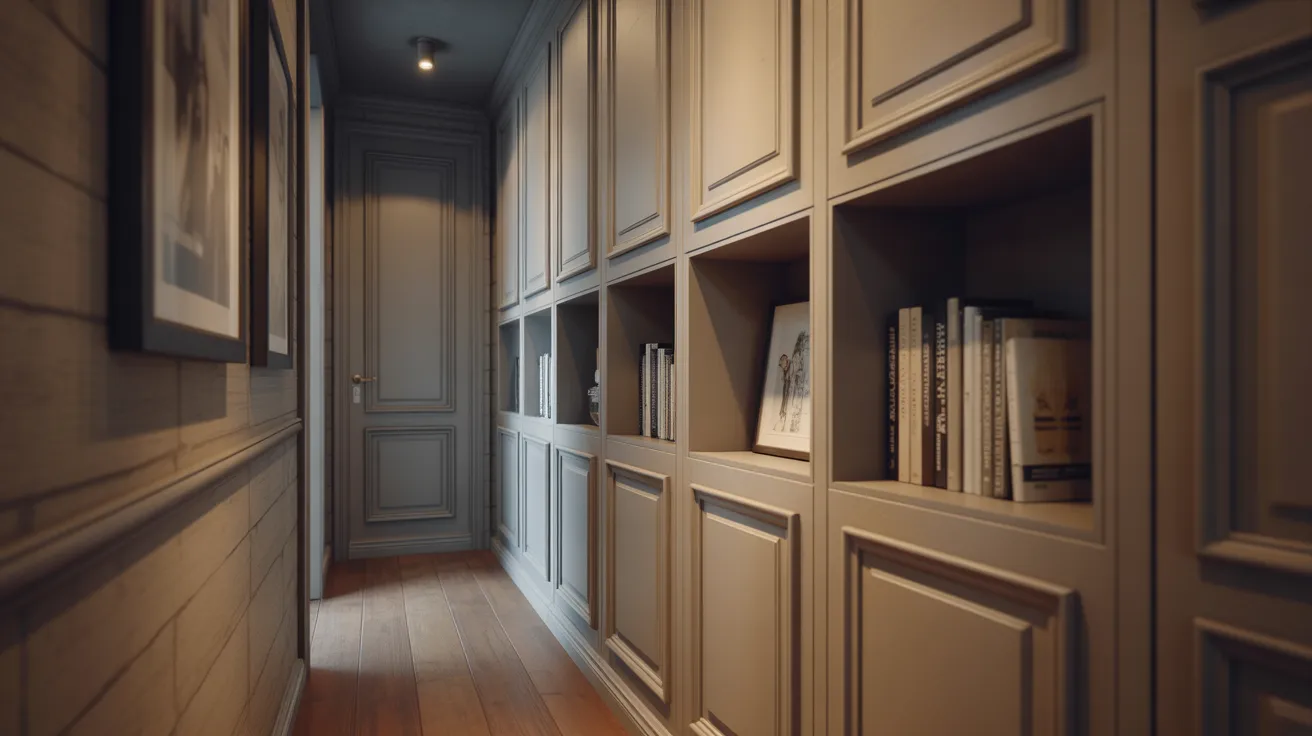
Smart storage keeps hallways clutter-free while adding practical function to otherwise wasted space.
Shallow Cabinets: Built-in cabinets only 6-8 inches deep provide storage without crowding. They’re perfect for shoes, cleaning supplies, or seasonal items. Recessed options work even better.
Decorative or Faux Doors: Add architectural panels that look like doors but actually hide shallow storage. This creates visual interest while serving a practical purpose. It makes blank walls more interesting.
11. Play With Ceiling Height and Vertical Lines
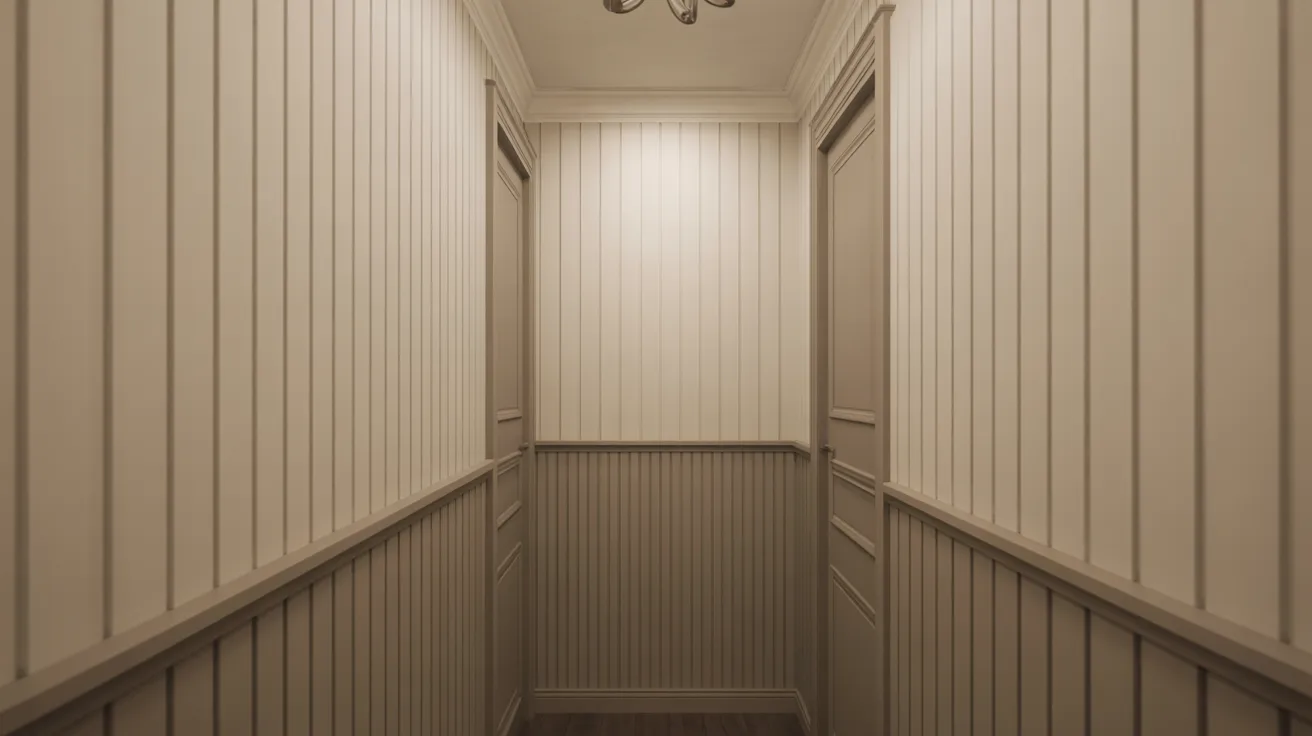
Vertical elements draw the eye upward and make low ceilings feel higher than they are.
Vertical Paint Stripes or Panels: Painting vertical stripes makes ceilings appear taller. Keep stripes subtle in narrow spaces. Board and batten installed vertically has the same effect.
Avoid Overcrowding: Don’t add too many decorations or visual elements. Keep things minimal and clean. Too much going on makes narrow hallways feel chaotic and smaller.
12. Add Texture Through Soft Furnishings
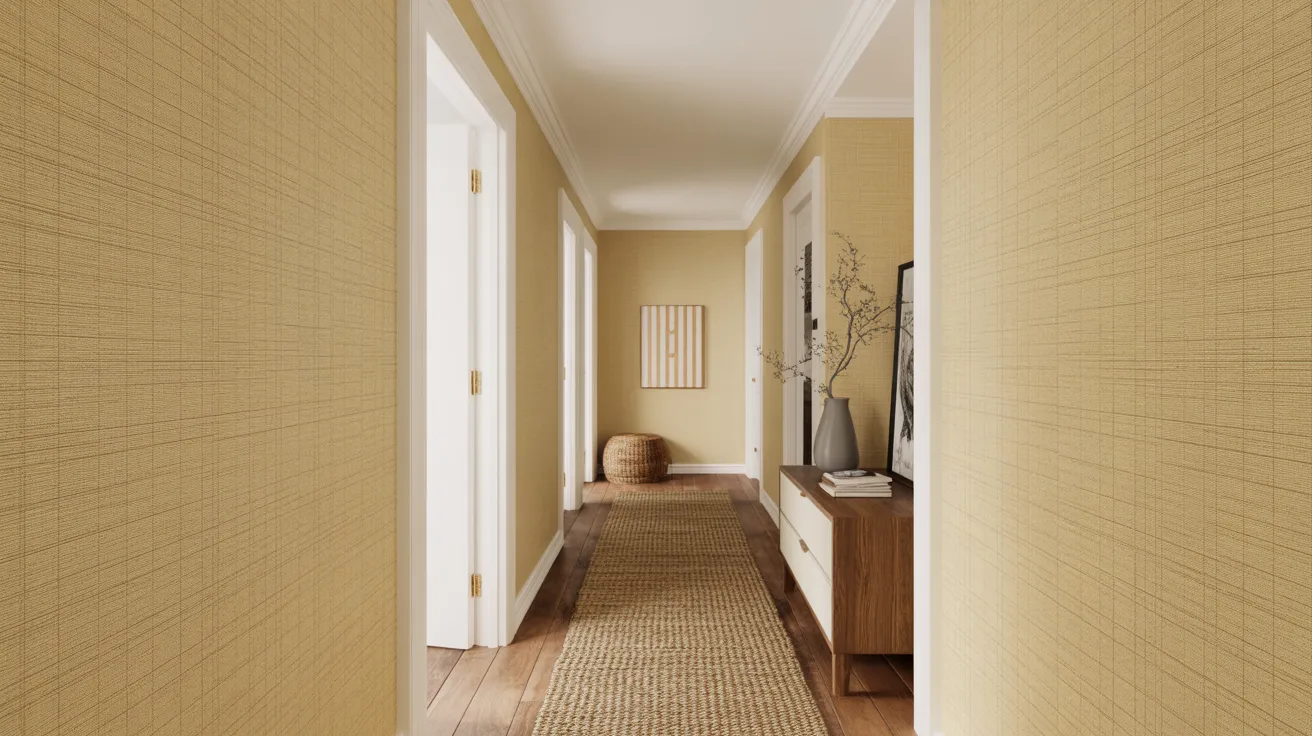
Textured elements add warmth and visual interest without making narrow hallways feel cluttered.
Rugs, Runners, or Wall Textures: A textured runner adds dimension underfoot. Grasscloth wallpaper or textured paint adds subtle interest to walls. These elements make spaces feel more finished and intentional.
Subtle Wallpaper or Paint Effects: Choose wallpaper with small, subtle patterns. Avoid large, bold prints in narrow spaces. Tone-on-tone patterns add interest without overwhelming the eye.
13. Create a Focal Point
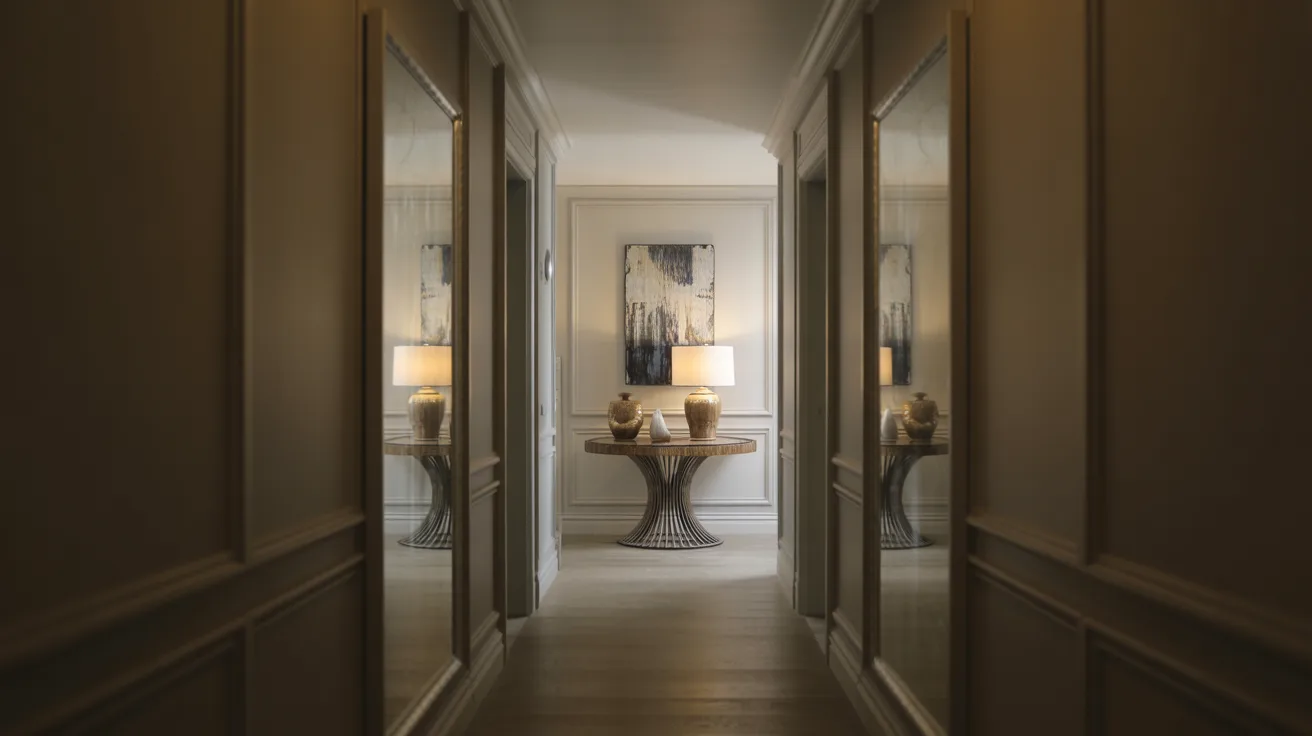
A focal point at the end of the hallway draws the eye forward and prevents the tunnel effect.
End-of-Hallway Feature: Place a console table, decorative lamp, or piece of art at the hallway’s end. This gives your eye a destination. It makes the hallway feel purposeful rather than just a pass-through.
Visual Flow: The focal point should complement your overall design. Keep it simple and uncluttered. This directs attention and makes the space feel more open.
14. Tie the Hallway Design to the Rest of the Home
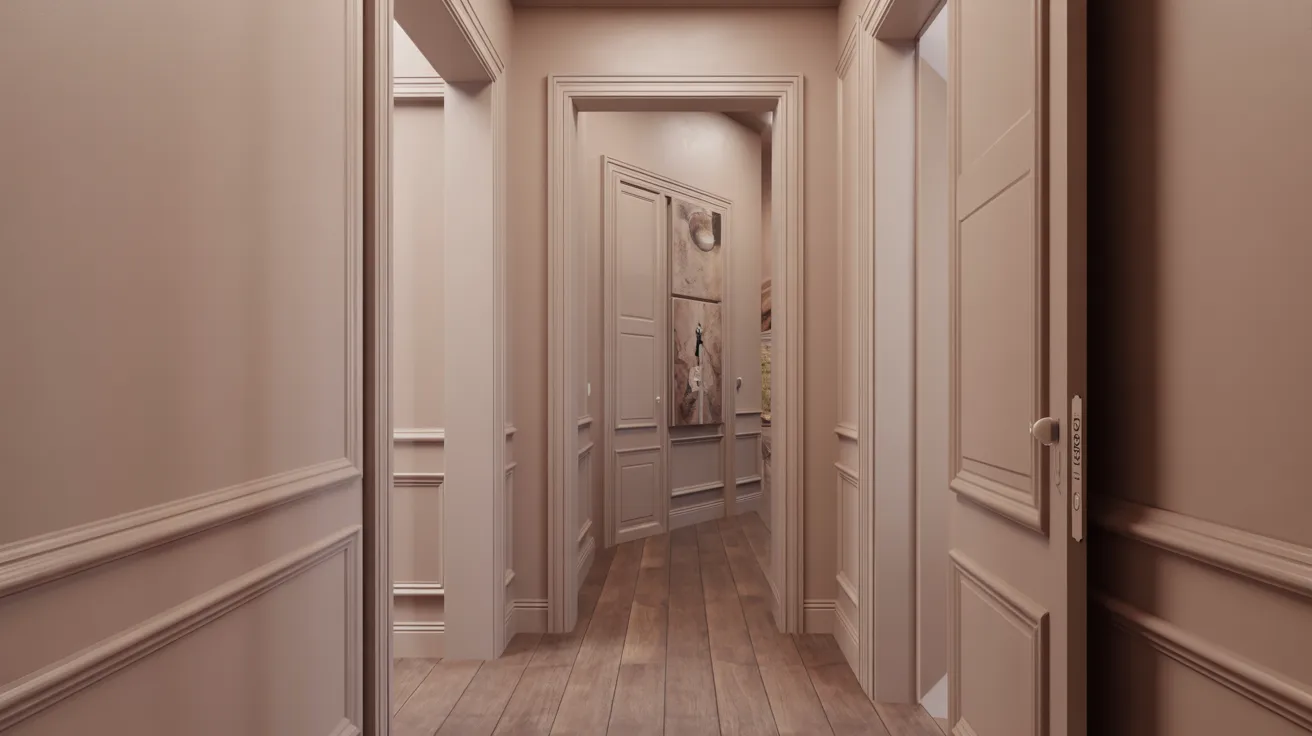
Creating visual continuity between your hallway and adjacent rooms makes your whole home feel larger and more cohesive.
Consistent Color Palette: Use the same paint colors or complementary shades from nearby rooms. Matching trim and flooring also helps. This makes the hallway feel like part of the home, not a separate space.
Architectural Cohesion: Match molding styles, door designs, and light fixtures to other areas. When architectural elements flow together, the entire home feels more intentional. Small details make a big difference.
15. Add Personality With Small Details
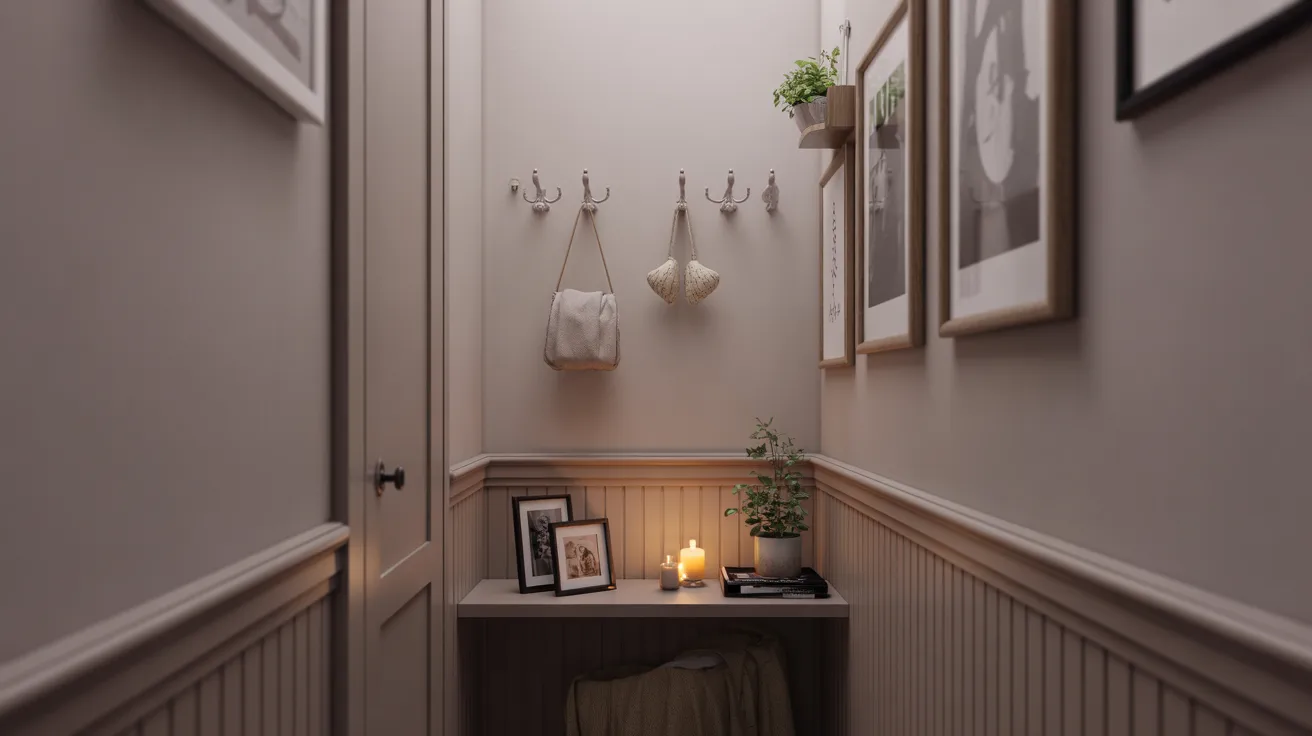
Personal touches make hallways feel lived-in and welcoming rather than cold and utilitarian.
Hooks, Small Decor, or Seasonal Accents: A few decorative hooks add function and style. Small plants, candles, or framed photos make the space feel personal. Keep it simple so you don’t create clutter.
Rotating Accessories: Change out small decor items with the seasons. This keeps the hallway feeling fresh. It’s an easy way to update the space without major changes.
Bringing It All Together
These narrow dark hallway ideas work best when you combine them thoughtfully. You don’t need to use all 15 tips at once.
Start with the basics like paint and lighting, then layer in mirrors, runners, and personal touches as your budget allows.
The key is creating a cohesive look that flows with the rest of your home. Small changes add up to make a big difference in how your hallway looks and feels every single day.
Conclusion
I remember my own narrow dark hallway feeling like a forgotten space for years. Once I painted it white and added better lighting, it completely changed how my whole house felt.
These 15 narrow dark hallway ideas really do work when you apply them thoughtfully.
You don’t need a big budget or professional help to see results. Pick one or two changes that speak to you and start there.
What’s your biggest hallway challenge right now? Share your thoughts in the comments below. I’d love to see your before-and-after photos and hear which tip made the biggest difference for you.
Frequently Asked Questions
What’s the best paint color for a narrow dark hallway?
Soft whites, warm creams, and light grays work best. These colors reflect light and make the space feel wider. Avoid dark colors that absorb light and make hallways feel smaller.
How can I add storage to a narrow hallway without blocking it?
Install shallow cabinets or built-ins that are only 6-8 inches deep. Wall hooks and floating shelves also work well. Recessed storage is the best option if you can manage it.
What type of lighting works best in dark hallways?
Combine overhead lights with wall sconces for layered lighting. LED bulbs in warm white provide bright, welcoming light. Dimmer switches let you control the mood and brightness.
How do I make a long narrow hallway feel shorter?
Paint the end wall a darker color to bring it forward visually. Add a focal point like artwork or a console table at the end. This breaks up the length and prevents the tunnel effect.
Can I use wallpaper in a narrow hallway?
Yes, but choose small-scale patterns or subtle textures. Vertical stripes make ceilings feel higher. Avoid large, busy patterns that make narrow spaces feel cramped and overwhelming.
