

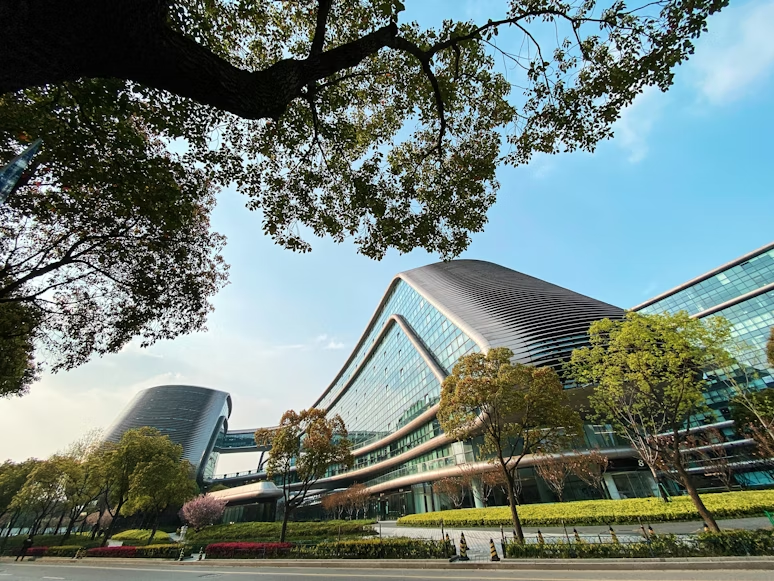
While minimalism is still a popular trend in commercial spaces, there’s a growing interest in bold and experience-driven outdoor design. Businesses are now moving away from sharply trimmed lawns and artificial turf toward more tech-driven and people-friendly spaces.
Going forward, we can expect native plants to be popular in many regions. Pollinator gardens and meadow-style borders are appearing alongside paths made with natural stone. Some commercial spaces are taking cues from Japanese design with calm, open spaces and weathered materials to create inviting and low-maintenance environments. Let’s look at some landscaping ideas for commercial outdoor spaces that are in line with modern trends.
Use Native and Climate-Ready Plantings
Since customers are becoming more and more climate-aware, businesses have to meet this demand in every aspect, even the way they design their spaces. It’s better for the environment if you use native plants that can grow in the region without being invasive or sucking up too many resources.
Start with plants that naturally grow well in your area. Native species are adapted to local soil, sun, and rain patterns. They need less water and fewer inputs once they establish. Gardens filled with native perennials attract bees and other helpful wildlife throughout the season. These plantings make your outdoor space feel rooted and alive without overwhelming keep.
If you want more color, include nectar-rich plants that bloom at different times. This extends color and pollinator visits from spring into late autumn. Small ponds or shallow dishes of water near these zones also invite beneficial insects and birds. This approach works especially well for office campuses, retail centers, hospitality venues, healthcare facilities, and mixed-use developments where visual appeal matters.
Use Permeable Paths and Natural Hardscapes
Modern businesses tend to gravitate toward surfaces that let water seep into the ground instead of running off. Options like permeable pavers, gravel paths, and stepping stones set in groundcover are suitable for office parks, corporate campuses, and educational institutions.
Natural stone, irregular flagstones, and river rock add texture underfoot and break up large paved areas. These materials work well with planting beds and guide movement without harsh transitions. If you have slopes, add gentle terraces or wide steps with contrasting textures to slow foot traffic and highlight garden sections.
Create Outdoor Living Zones
One of the best ways to enhance a commercial space is to make the exterior look more like a designed space rather than just grass and shrubs. Plan spaces that match the service you provide.
For example, retail and hospitality properties may incorporate dining terraces, fire pit lounges, or cafe-style seating to improve guest experience and increase dwell time. Meanwhile, healthcare facilities and educational campuses often use quiet garden courtyards with comfortable seating to create a restorative space for visitors and staff. Good lighting at different heights, such as ground lights, string lights, and table lamps, further keeps these areas welcoming even after sundown.
Install Smart Water and Lighting Touches
If you have the budget for luxury upgrades, focus on watering and lighting. Choose warm and low-glare fixtures that layer light. You may also use spotlights on trees for vertical interest and ground-level path lights to make walking feel safe.
For offices and business spaces in hot and dry regions, water management is extremely important. Efficient irrigation tools adjust watering based on moisture levels so plants are supported without waste. Rain barrels or simple catch basins also help capture water for drier spells. These upgrades are also useful if you plan to turn your commercial space into a rental home later on.
Apply Parking Lot Striping & Pavement Markings
In commercial spaces, marked pavement and patterned driveways improve safety, traffic flow, and first impressions. Clear visual cues help customers, employees, and delivery vehicles navigate parking lots and entry points easily.
Subtle design elements, such as contrasting paver bands, directional arrows, and clearly defined pedestrian zones, add structure to large paved areas while keeping the space organized. You can opt for professional line striping to make sure parking stalls, crosswalks, loading zones, and accessible spaces are compliant with current regulations and easy to identify.
Patterned driveways and marked pavements are especially effective for retail centers, schools, religious institutions, malls, and healthcare facilities, where wayfinding and accessibility are non-negotiable.
Use Container and Vertical Greenery
If you have small or tight spaces in your outdoor area, make every inch count with containers and vertical installations. Large planters with mixed foliage bring color and form close to seating areas or entry points. They also draw eyes upward and make the walls feel taller.
When planning, think in layers. Tall pots go in the back, mid-height in the middle, and groundcover plants go near walkways to create depth. Choose a mix of leafy greens, flowering plants, and trailing vines to keep your eye moving. Vertical gardens also divide space. Use them to block less attractive views, particularly in retail storefronts and urban office buildings, where aesthetics are a must-have.
Use Tech-Friendly Outdoor Features
The future is tech-driven, and the same applies to landscape design, too. Besides the water and lighting basics that we’ve mentioned above, you can also add other upgrades. For example, office campuses can install weather-resistant sound systems and outdoor Wi-Fi support informal meetings, events, or employee break areas. Hospitality businesses can benefit from outdoor screens for promotions, sports viewing, and entertainment, which increases guest engagement.
Motion-activated lights also improve safety on steps. For longer seasons, set warm LED lights around the area so you can entertain into cooler evenings. You may also invest in smart commercial outdoor furniture, such as modern tables and benches with built-in USB ports. Similarly, automated shade systems, like motorized pergola roofs and smart umbrellas, adjust to sunlight or wind at the touch of a button. These tech-friendly additions keep your commercial space future-ready and efficient.
Endnote
As you can see, landscape designs for commercial spaces are all about innovation, technology, creating lively spaces, and maximizing the area’s appeal. Keep up with these trends to create areas for relaxation for your guests, customers, and staff. Be it small updates or large redesigns, thoughtful investments in landscaping can turn underused outdoor areas into valuable extensions of your commercial property.
