

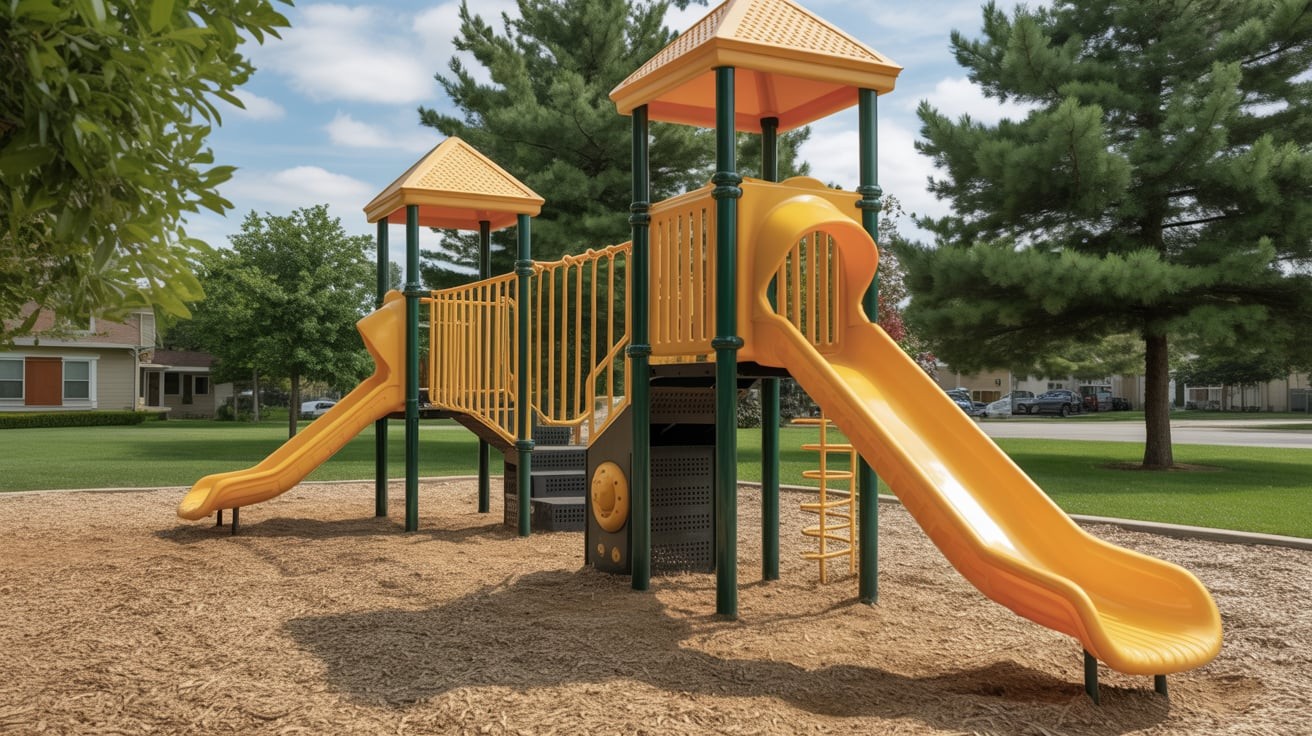
It happens to virtually every home buyer. You take a drive through the neighborhood, you scan the streets, and you look for shops, cafes, and neighborhood parks. You may not even have children, but thriving neighborhood parks are a sure sign of strong property values and community engagement. They bring in families with kids, improve the quality of life in the area, and attract local businesses. Here’s how:
They Attract Families with Children
Families with children are the most stable demographic when it comes to buying homes. They typically don’t want to have to move again soon, so they’re looking for a long-term house.
This means they’ll look for neighborhoods that will be good for their children. They’ll also contribute to the neighborhood by attending local schools, participating in local events, and spending money in local businesses, all examples of community engagement.
Neighborhood playgrounds act as beacons of a healthy community. So that when parents see what they view as great parks, they’ll be more likely to consider a house in the neighborhood. Big, grassy fields, new, inclusive commercial play structures, water features, and shade from native plants are all examples of clearly attractive qualities in good parks. Thus, neighborhood playgrounds increase demand for nearby houses, driving up property values.
They Speed Up Home Sales
Quite often, houses without pretty neighborhood playgrounds nearby will sit on the market for weeks or even months. Even people without kids want to live in a safe, stable, welcoming neighborhood. Great parks are a sign of exactly that, a thriving neighborhood. They’re an invitation to all residents to get outside, walk, bike, or play, with or without kids. You can see grown adults playing frisbee in many wide open parks, while kids run and jump on structures nearby.
That’s why home sales in neighborhoods with busy neighborhood parks will often sell much faster than those without. Especially today, more and more people are realizing the benefits of spending time in green spaces. Parents can take kids to play while they meet up with other adults to socialize. Adults without kids can enjoy a trail or even sit under a tree and read a book. And of course, as the rate of home sales speeds up, demand rises, and property values increase.
They Improve Quality of Life
Neighborhood playgrounds improve the quality of life for the entire community. Quite often, people don’t get outside and move their bodies as much as they should because they feel they don’t have either time or access, or both. Most adults are busy with work or raising families. Most kids are stuck inside either at school or at home all day. And without a nearby green space like a park, it’s easy to put off exercise or nature time for another day.
But when the home is just a block or two from the park, it’s dramatically easier to get out for even 30 minutes at a time. Families may take an after-dinner walk during the lighter summer nights. Friends are more likely to schedule a game of catch at a local baseball diamond. And parents can schedule play dates for their kids and for their own social time if they have easy access to the park. Now, you have a healthier, more engaged community that may just stop for coffee or ice cream in a local shop on the way home.
They Act as Community Hubs
It can be challenging to know how to get involved in your community if you don’t know where to go, who to go with, or what to do. Most people aren’t going to show up at a city council meeting to get more involved, especially if they don’t know anyone. People are isolating at higher rates than ever before, and much of this shift has to do with the fact that they don’t know how to connect anymore.
Neighborhood parks are a great resource to get people more engaged with each other. Families with young children can take their kids to play and meet other families in the neighborhood. The city can plan an event to bring people together at a Fourth of July barbecue or a Christmas tree lighting. Members of the community can even start a recreational sports team to meet new people. It doesn’t take much to get this energy going, and once you do, you’ll have an improved neighborhood with engaged residents and higher property values.
They Attract Local Businesses
Finally, one of the best things about active communities is that they’re inherently walkable. People can walk from their homes to the local playground, from there to grab lunch, maybe stop at a market for a few groceries, and then head home. These types of neighborhoods have lots of activity during business hours, which means local businesses do quite well. As a result, new local businesses are more likely to open up shop and bring more money and culture to the community.
What does this have to do with neighborhood parks? Usually, the park comes first. It can be hard to try to carve out space for a community playground in an existing neighborhood. But once you have one, it’s not so hard to bring in new businesses. The city can change zoning laws to include mixed-use lots, and it can invite new entrepreneurs to open up bakeries, clothing stores, and even small bookstores. The more quaint your area, the better.
In the end, the neighborhood playground is the center of many communities across the country and around the world. As a community hub, life thrives in local parks, where people can meet each other, talk about important issues, grab a drink or a bite, and raise their kids to be contributing members of society. And all it takes is a city willing to invest in developing the space and installing a few play structures. Before you know it, you’ll have a bustling, active community showing up to play.
