

Getting your bathtub faucet height right matters more than you think. I’ve seen too many bathrooms where water splashes everywhere or handles sit awkwardly out of reach.
This guide shows you the exact measurements for both freestanding and wall-mounted faucets.
You’ll learn proper heights, clearances, and spacing that prevent common problems.
I’m covering everything from spout positioning to handle placement, plus the factors that affect your specific setup. Trust me, measuring correctly now saves you from expensive fixes later.
Let’s walk through this together so your bathroom works the way it should.
Why Bathtub Faucet Height Matters
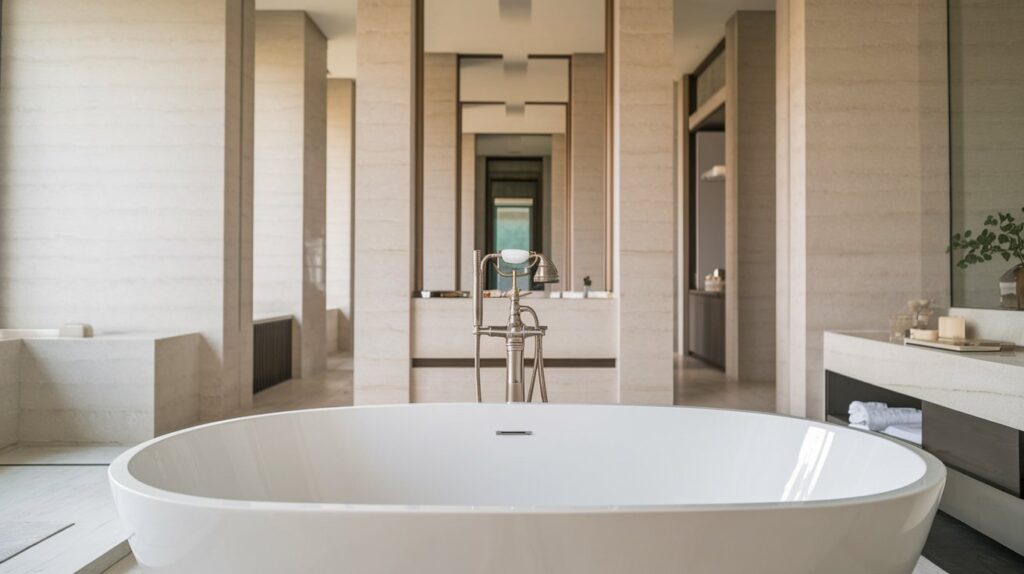
Proper height makes your bathroom work better. When faucets sit at the right level, you can reach handles without stretching or bending awkwardly. Your daily routine becomes easier.
Wrong placement creates real problems. Water splashes onto floors and causes damage over time. Faucet parts don’t fit correctly when rough-ins are off.
You might struggle to operate controls comfortably. The right height also affects how your bathroom looks.
Balanced proportions make the space feel put together. Everything lines up properly. Your tub area becomes both functional and good-looking.
Think about who uses the bathroom. Different heights mean different needs. Getting this right now prevents frustration for years to come.
Understanding Bathtub Faucet Types
Choosing between freestanding and wall-mounted faucets shapes your entire installation. Each type has distinct needs and limitations.
Freestanding Faucets
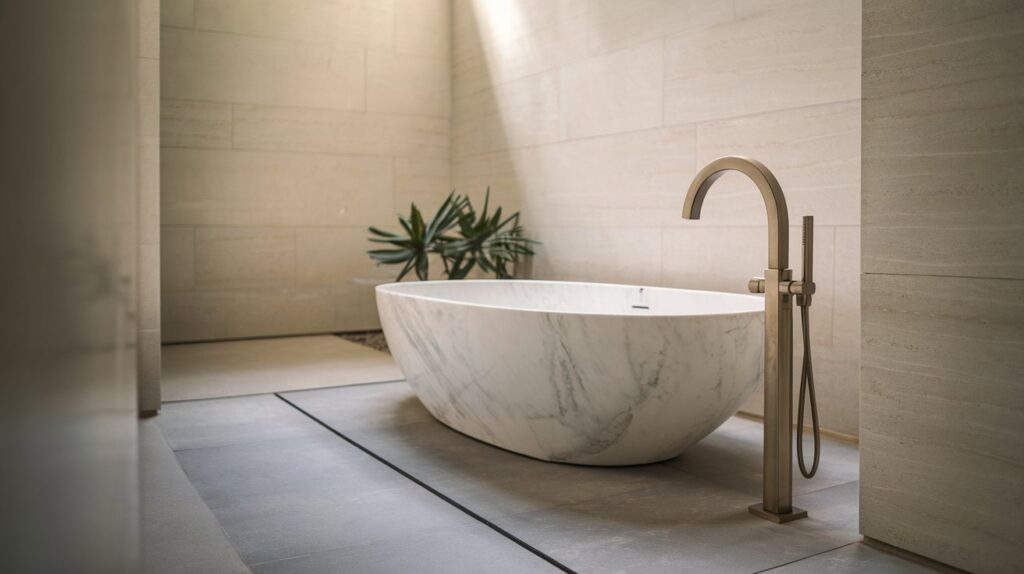
These fixtures stand alone beside your tub. They extend up from the floor and create a statement look. You get freedom in placement since they’re not tied to wall locations.
The catch? You need plumbing running beneath your floor. This works great in new builds but gets complicated in existing bathrooms. The floor structure must support the pipes and fixture weight.
Wall-Mounted Faucets

These attach directly to your wall behind the tub. They save space and work well in compact bathrooms. Installation is simpler in many cases.
Your existing plumbing dictates where these can go. Wall studs and pipe locations limit your options. But they’re practical and reliable for most situations.
Recommended Faucet Heights
Getting measurements right prevents problems before they start. These ranges work for most installations but adjust based on your specific needs.
Freestanding Bathtub Faucets
Your spout should sit 33 to 42 inches from the floor. This range accommodates different tub depths. Deeper tubs need higher spouts.
Place handles between 28 and 36 inches high. This height lets most people operate controls without strain. If you add a handheld shower, position it 36 to 48 inches up.
Keep 6 to 10 inches between the spout and tub rim. This clearance stops water from hitting the edge and splashing out.
Wall-Mounted Bathtub Faucets
Mount your spout 4 to 6 inches above the tub rim. This creates good water flow without excessive splash.
Place control handles 8 to 12 inches above the spout vertically. Give handles at least 3 inches of clearance from nearby walls. You need room to grip and turn them easily.
For combination units with showers, put the showerhead 28 to 36 inches above the spout position.
Key Factors to Consider
Every bathroom is different, so standard measurements need adjustments. Think through these variables before you start.
User Height and Comfort
Who will use this bathroom most? Taller people need higher handles. Multiple users mean finding a middle ground that works for everyone.
Test reach distances before finalizing positions.
Tub Dimensions
Your tub’s rim height affects everything. Measure from floor to rim carefully. Deeper soaking tubs need more spout clearance to prevent loud splashing. Wider tubs give you more flexibility in placement.
The tub’s depth changes how water enters. A 6-inch clearance might work for standard tubs but feel wrong for extra-deep models.
Plumbing Constraints
Existing pipes limit where you can place fixtures. Moving plumbing costs money and time. New construction gives you freedom to position everything optimally.
Make sure your stub-outs are level and securely mounted. Loose connections cause leaks later. Check that pipes won’t interfere with faucet mounting.
Noise and Splash Control
High spouts create loud, splashing water. This happens when water falls too far into the tub.
Lower the spout height or add aerators to reduce noise. Deep tubs especially benefit from shorter drops.
Step-by-Step Method for Determining Faucet Height
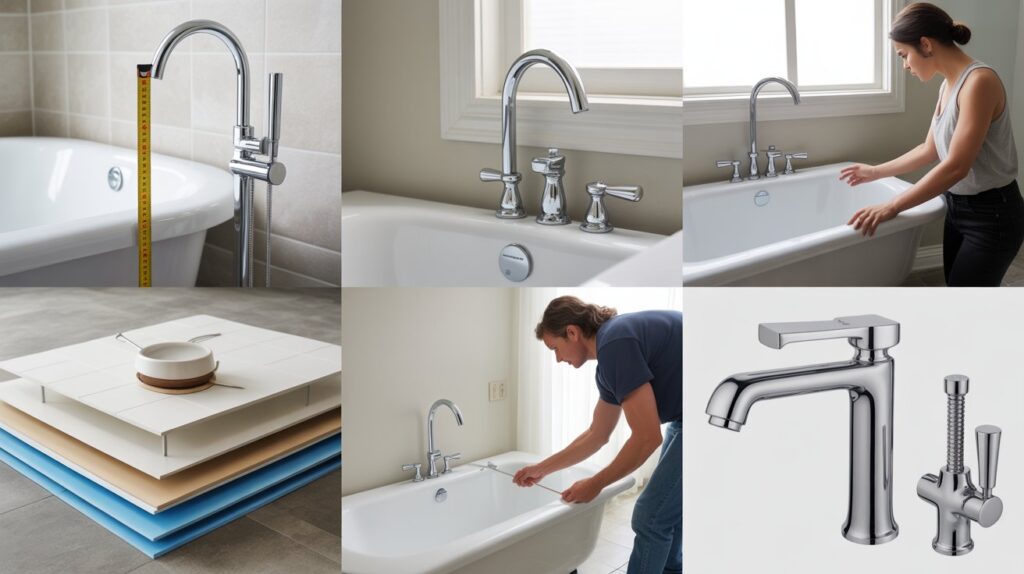
Follow these steps to calculate your exact faucet height. This process works for both freestanding and wall-mounted installations.
Step 1: Start by measuring your bathtub rim height from the finished floor. Write this number down.
Step 2: Add the recommended spout clearance. For freestanding faucets, add 6 to 10 inches. For wall-mounted types, add 4 to 6 inches.
Step 3: Account for your flooring thickness. Include tile, thin-set mortar, underlayment, and self-leveler. These layers add up quickly. Measure before the floor is finished if possible.
Step 4: Consider who will use the bathroom most. Adjust heights slightly for taller or shorter users. Comfort matters more than strict guidelines.
Step 5: Check your faucet manufacturer’s specifications. Total height requirements vary by model. Some valves need specific rough-in dimensions. Verify these before cutting into walls or floors..
Common Installation Mistakes and Solutions
Even experienced installers make these errors. Knowing them helps you avoid costly do-overs.
- Faucet Too Low: Water hits the tub edge instead of flowing smoothly into it. Handles sit awkwardly low and feel uncomfortable to use. Raise your faucet above the minimum clearance. Add extra inches if your tub is deeper than standard. Better too high by an inch than too low.
- Faucet Too High: Water splashes loudly and bounces out of the tub. The noise is annoying and water lands on your floor. Lower the spout to reduce drop distance. Install a bubbler or flow diverter to soften water entry. These small changes make big differences.
- Handle Misalignment: Handles placed too close to walls are hard to grip. Controls positioned too low force you to bend uncomfortably. Set handles within the recommended range with proper wall spacing. Leave 3 inches minimum from any surface. Test the reach before securing anything permanently.
Preparation Checklist Before Installation
Measure everything twice before making cuts or holes. This checklist prevents missed details.
- Measure your tub rim height from the finished floor surface.
- Calculate desired spout clearance based on tub type and depth.
- Mark handle and control placement spots on the wall or floor.
- Locate stub-out and pipe positions accurately.
- Read through manufacturer rough-in guides completely. Note any specific requirements for your model. Keep these instructions handy during installation.
Conclusion
I’ve installed enough faucets to know that getting the height right makes all the difference. Take your time with measurements. Think about who uses your bathroom daily.
A few extra minutes of planning now prevents years of annoyance. Your tub area should work smoothly and look good doing it.
Got questions about your specific setup? Drop a comment below. I’d love to hear how your installation goes.
Frequently Asked Questions
What is the standard height for a freestanding tub faucet?
Most freestanding tub faucets should be 33 to 42 inches from the floor to the spout. The exact height depends on your tub depth and rim height. Measure carefully and add 6 to 10 inches of clearance above the rim.
How high should a wall-mounted tub spout be above the rim?
Wall-mounted spouts work best at 4 to 6 inches above the tub rim. This height provides good water flow without excessive splashing. Adjust slightly based on your tub depth and water pressure.
Can I install a tub faucet at a custom height?
Yes, you can adjust heights for your specific needs and comfort. Just maintain minimum clearances to prevent splashing and ensure proper operation. Consider all users and check manufacturer guidelines first.
What happens if my tub faucet is too high?
A faucet that’s too high creates loud splashing and can spray water outside the tub. You’ll notice increased noise and potential water damage. Lower the spout or install aerators to reduce problems.
Do I need different heights for combination tub and shower faucets?
Yes, combination units need proper spacing between components. Place the tub spout first, then position shower controls 8 to 12 inches above. The showerhead should sit 28 to 36 inches above the spout.
