

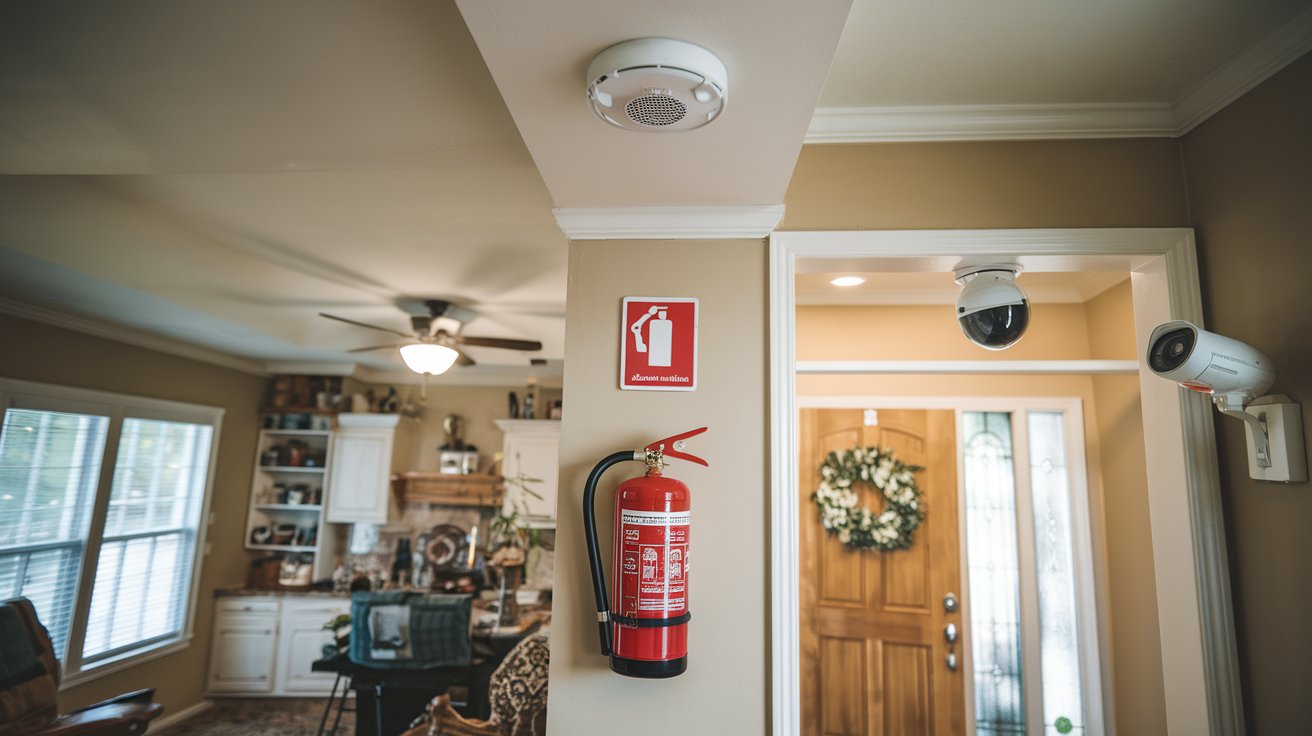
If you’re worried about home security, then you might be tempted to make an investment in a few key devices and gadgets. These might include a sturdy front door and a set of locks that will not only keep intruders at bay but also deter them from making the attempt to get in.
There are, however, other safety upgrades that can make a big difference.
Electrical Panel Maintenance: A Fire Prevention Step
Electrical panels and wiring do not last forever. While you might admire the vintage charm of an older home, the electrical system hidden behind the plaster often lacks the safety features of modern equivalents. Over time, the insulation around wires degrades, and connections loosen as temperatures fluctuate, which introduces a significant risk of fire.
An outdated panel may fail to trip when a circuit overloads. Instead of cutting the power, the breaker allows electricity to continue flowing through overheated wires, eventually igniting surrounding materials. You should hire a licensed electrician to inspect your circuit breakers and wiring, especially if you recently purchased a property or if the home is over twenty years old.
A professional looks for specific warning signs that an untrained eye misses, such as corrosion on the bus bars or evidence of “arcing,” where electricity jumps between gaps in the wiring. They can also install Arc-Fault Circuit Interrupters (AFCIs). Unlike standard breakers that only stop overloads, AFCIs detect dangerous sparking conditions that often precede electrical fires and shut down the circuit immediately. This small investment in skilled labor provides considerable peace of mind. It costs far less to verify the system’s integrity now than to repair structural damage after an electrical fire occurs.
Securing Your Digital Perimeter: The VPN Advantage
The physical doors and windows that protect your property might be sturdy, but they are no longer the only entry points. If your digital doors remain wide open, an intruder enters with little difficulty, and you might not realize they have done so until they steal your identity or compromise your banking details. If you work remotely, or if your home relies on smart devices, you must ensure the digital space receives appropriate protection.
Hackers frequently target the “Internet of Things” (IoT), devices like smart thermostats, cameras, and digital assistants, because manufacturers often secure them poorly compared to laptops or smartphones. Once a bad actor accesses your Wi-Fi network through a vulnerable smart bulb, they can move laterally to access more sensitive data on your computer.
That means you need a high-quality VPN download, ideally configured directly on your router. This setup encrypts all traffic leaving your home, ensuring that malicious outsiders cannot intercept or read the data regardless of which device sends it. By masking your IP address and scrambling your data, you create a digital blind spot for criminals. They cannot exploit what they cannot see.
Sliding Door Security: Simple, Effective Reinforcements
Sliding glass doors generally offer less resistance than their traditional hinged equivalents. The latch mechanisms often rely on a simple hook that a determined intruder can jiggle open or break with sheer force. Furthermore, the design itself presents a flaw: the door sits on a track, meaning a thief can sometimes lift the entire door out of its frame with a crowbar, bypassing the lock entirely.
Fortunately, a low-cost, low-tech solution remedies this specific mechanical weakness effectively. You simply cut a wooden dowel rod or a piece of PVC pipe to the appropriate length and place it in the bottom track behind the sliding door. This physical block prevents the door from sliding back even if the lock fails. For the lifting issue, installing anti-lift brackets or inserting screws into the upper track leaves just enough space for the door to slide but not enough for someone to lift it off the rails.
If you have the budget, replacing the door offers deeper benefits. Modern sliding doors come with shatter-resistant glass and multi-point locking systems that secure the door at the top, bottom, and center simultaneously. If you intend to sell the house in the near future, this upgrade creates a selling point that allows you to push up the asking price.
The Garage Door Emergency Release Vulnerability
Many homeowners treat the garage door as a solid wall, yet it often represents the weakest link in the home’s perimeter. Aside from leaving the remote in a car parked outside, which acts as a key left under the mat, the mechanical emergency release cord poses a specific danger. This cord hangs inside to allow you to open the door manually during a power outage. However, resourceful thieves use a wire coat hanger to fish through the gap at the top of the garage door, hook the release cord, and pull it.
This disconnects the automatic drive, allowing them to slide the door open by hand in seconds. You can prevent this by using a simple plastic zip-tie to secure the release latch to the drive chain bracket. The zip-tie provides enough resistance to stop a coat hanger from triggering the release mechanism, but in a genuine emergency, a human pulling the cord firmly from the inside will snap the plastic tie and free the door. This modification costs pennies and neutralizes a common entry method without permanently disabling your safety exit.
Dryer Vent Maintenance: The Hidden Fire Hazard
While electrical fires concern the wiring, another major fire risk accumulates silently in your laundry room. Dryer vents collect highly flammable lint that bypasses the trap in the machine. Over months and years, this material coats the inside of the ductwork, restricting airflow and causing the dryer to run hotter. If the heat builds up sufficiently, the lint ignites, sending flames rushing through the vent system and into the walls.
Cleaning the lint trap after every load is a good habit, but it does not solve the ducting issue. You need to clean the external vent hose annually using a dryer vent cleaning kit, which usually consists of a flexible rod with a brush attachment that connects to a drill. The spinning brush dislodges the caked-on lint, while a vacuum sucks out the debris. This process not only drastically lowers the risk of combustion but also improves the efficiency of your appliance, drying your clothes faster and lowering your energy bill.
Landscaping as a Defensive Strategy
Landscaping significantly influences how attractive your home appears to a burglar. Overgrown bushes near windows provide excellent cover for someone trying to pry open a sash unseen. Conversely, a barren yard leaves your home exposed. The goal is to use nature as a deterrent and a surveillance tool simultaneously.
Planting thorny shrubs like rose bushes, holly, or pyracantha beneath ground-floor windows creates a painful physical barrier. A thief will likely choose a target that does not require navigating a prickly obstacle course to gain entry. Additionally, keeping tree limbs trimmed prevents them from acting as ladders to upper-story windows.
You should aim to maintain the “two-foot, six-foot rule” for visibility. Keep ground plants cut lower than two feet and tree canopies trimmed higher than six feet. This leaves a clear line of sight for neighbors and passersby to see your house. When a burglar realizes they cannot approach the house without being observed from the street, they usually move on to an easier target.
Water Leak Detection Systems
Security usually implies protection from theft, but water damage claims happen far more frequently than burglary claims. A burst pipe or a leaking water heater causes catastrophic damage to the structure of the house, promotes mold growth, and ruins personal possessions. Often, these leaks begin as slow drips that go unnoticed inside a cabinet or behind an appliance until the floorboards warp.
Smart water leak detectors offer a proactive solution. You place these small, battery-operated sensors near high-risk areas: under sinks, behind toilets, near the washing machine, and by the water heater. When a sensor detects moisture, it sends an instant alert to your smartphone and sounds an audible alarm.
For superior protection, you can install a smart water shut-off valve on your main water line. If a sensor detects a leak, it signals the valve to cut the water supply to the entire house automatically. This technology turns a potentially ruinous flood into a minor puddle that requires a simple towel to clean up.
