


Choosing satin or semi gloss for cabinets confused me during my kitchen remodel last year. I stood in the paint aisle completely lost about which finish would actually last.
I’m here to clear up that confusion.
This guide shows exactly how each finish performs in real kitchens. You’ll learn about durability, cleaning, and appearance without complicated terms.
I’ll cover what makes each different, which handles daily wear better, how easy each cleans, and when to pick satin versus semi-gloss.
By the end, you’ll know which finish fits your cooking habits and style. I’ve tested both myself and talked to dozens of homeowners.
Trust me, choosing right now beats repainting later.
Understanding Cabinet Paint Finishes
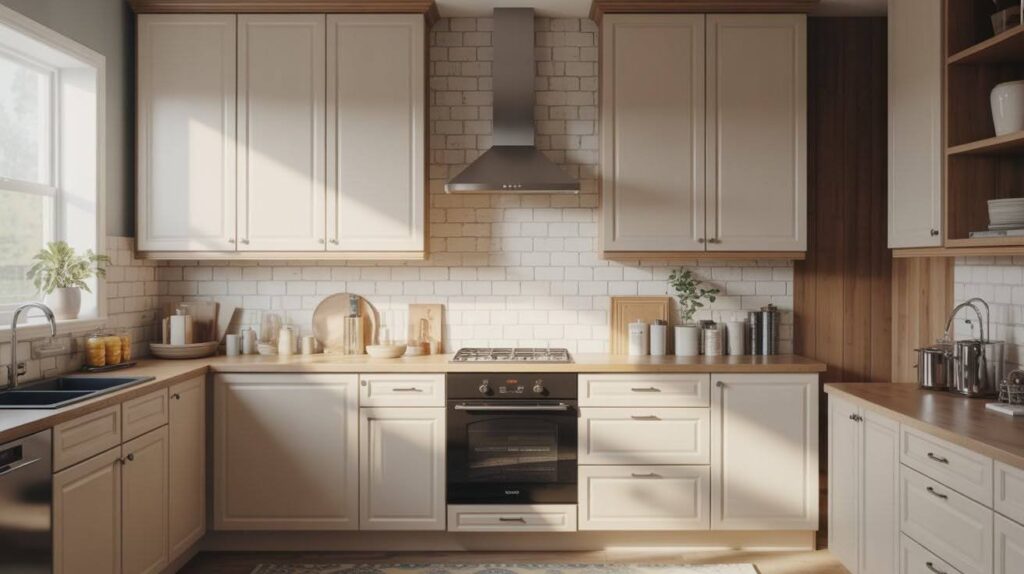
Cabinet paint finishes affect more than just appearance. The sheen level impacts how well your cabinets resist wear, how easily they clean, and how they reflect light throughout your kitchen.
Satin offers less reflection and a softer look, while semi-gloss provides more shine and a harder protective surface. Both work well for cabinets but serve different needs.
The right finish depends on how you use your kitchen, your cabinet condition, and your style preferences.
What Is Satin Finish for Cabinets?
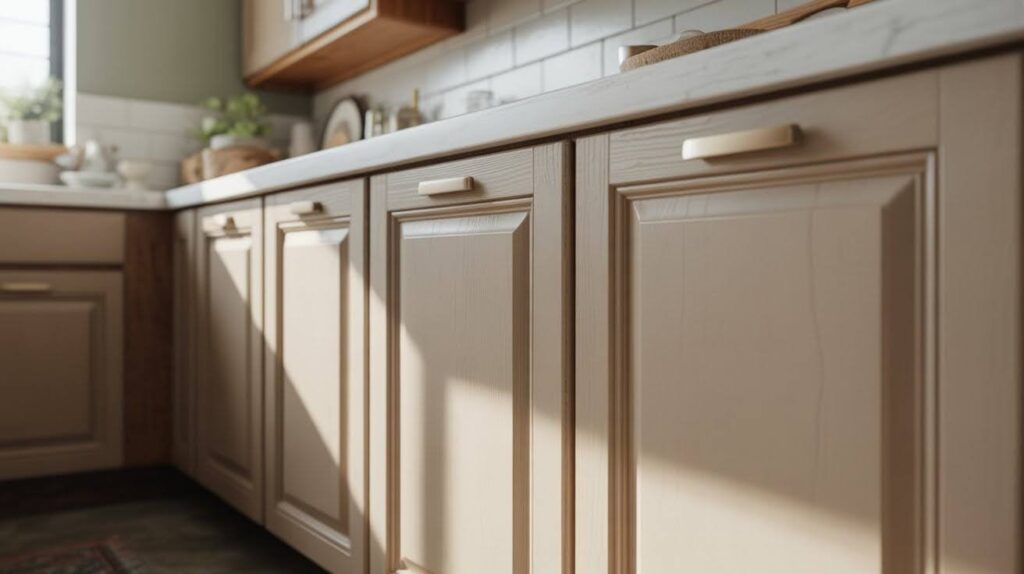
Satin finish creates a low-sheen surface with minimal light reflection, giving cabinets a smooth, soft appearance that leans toward a muted, contemporary look.
Durability: Satin holds up reasonably well with moderate use, resisting everyday wear better than flat paint but not as strongly as glossier finishes. It lasts several years with proper care.
Cleaning: You can wipe satin cabinets with a damp cloth and mild soap, though stubborn grease requires more scrubbing than glossier finishes. Touch-ups blend in well.
Pros:
- Hides surface imperfections, scratches, and wood grain irregularities
- Creates a contemporary look perfect for modern or farmhouse styles
- Easier to apply evenly with fewer visible brush strokes
Cons:
- Less tough in high-traffic areas
- Grease and moisture penetrate more easily
- Doesn’t brighten dark kitchens
What Is Semi-Gloss Finish for Cabinets?
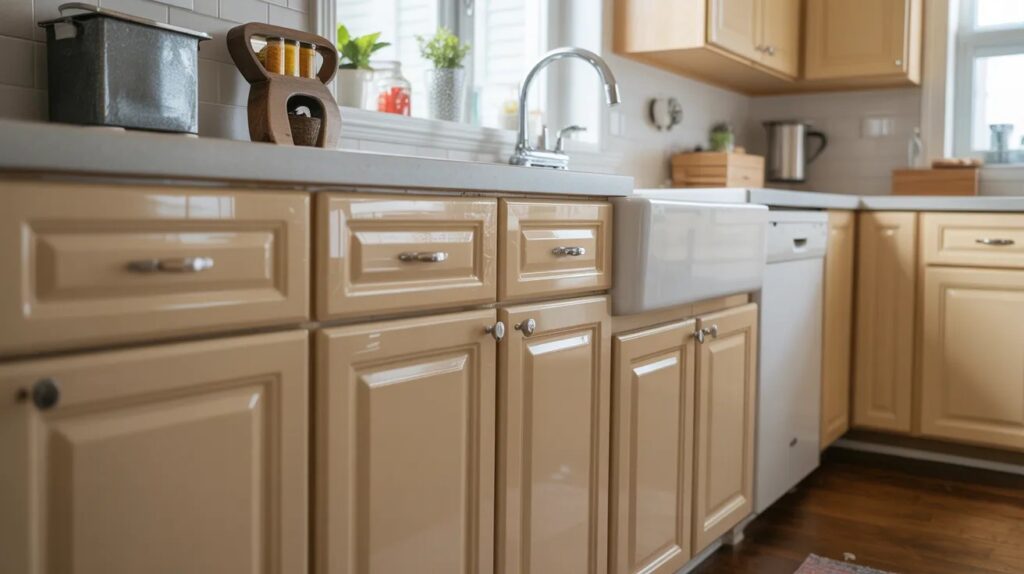
Semi-gloss provides a shiny, reflective surface that bounces light around the kitchen and creates a polished, bright appearance.
Durability: Semi-gloss is incredibly tough, resisting scratches, chips, and wear better than lower-sheen options. It handles busy kitchens where doors get opened constantly and lasts longer before needing a refresh.
Cleaning: The smooth, hard surface repels grease, moisture, and food splatters. Stubborn messes come off with minimal scrubbing, and the durable finish won’t break down from frequent cleaning.
Pros:
- Perfect for active households with kids and pets
- Excellent moisture resistance near sinks and dishwashers
- Brightens darker kitchens by reflecting light
- Fast, efficient cleaning
Cons:
- Shows every surface flaw and imperfection
- Requires more application skill
- Touch-ups are tricky to blend
- The shiny look isn’t for everyone
Satin vs. Semi-Gloss: Key Differences
Still confused? This table is going to help you out to make the best choice.
| Feature | Satin | Semi-Gloss |
| Appearance | Subtle, understated | Bright, noticeable shine |
| Imperfections | Hides scratches & dents | Highlights flaws |
| Durability | Moderate wear resistance | Tougher, lasts longer |
| Cleaning | Requires more effort | Fast, stain-resistant |
| Lighting | Better for bright kitchens | Brightens dark spaces |
| Application | Easy to apply & touch up | Shows brush strokes |
When Satin Is the Better Choice
Satin finish works best when you need to hide imperfections, prefer a softer modern look, or have a kitchen with lighter use.
Older Cabinets: If your cabinets have visible wood grain, dents, or surface irregularities, satin minimizes their appearance without extensive prep work.
Modern Design: Satin complements contemporary, farmhouse, and Scandinavian styles that avoid excessive shine, creating a relaxed, approachable feel.
Lower Traffic: Kitchens with occasional cooking and smaller households perform well with satin’s softer look without sacrificing much performance.
When Semi-Gloss Is the Better Choice
Semi-gloss excels in demanding kitchens where durability, moisture resistance, and brightness matter most.
Busy Households: Daily cooking with kids or pets demands semi-gloss’s ability to resist constant wear and tear without showing damage.
High-Moisture Areas: Cabinets near sinks, stoves, and dishwashers benefit from semi-gloss’s protective barrier that repels water and resists steam.
Dark Kitchens: Spaces lacking windows or with dark walls need semi-gloss to reflect light and make the room feel larger and more open.
Expert Recommendations
Professional painters typically recommend semi-gloss for kitchens with daily cooking, citing durability and easy maintenance. For older cabinets or limited prep budgets, they suggest satin.
Industry trends have shifted toward semi-gloss as homeowners prioritize durability and cleaning ease. However, satin remains popular in modern and transitional homes.
White and light gray cabinets work well with both finishes, while darker colors look better in semi-gloss due to added depth.
Choosing the Right Finish
Ask yourself:
- How often do you cook? (Daily = semi-gloss)
- Do your cabinets have visible flaws? (Yes = satin)
- How much natural light exists? (Dark = semi-gloss)
- How much time for cleaning? (Less = semi-gloss)
- What’s your design style? (Modern = satin, traditional = semi-gloss)
Test samples by painting small areas on actual cabinet doors. Live with them for a week, observing appearance at different times and cleaning ease after cooking.
Consider your lighting, cabinet color, and wood quality. Bright kitchens handle satin dim ones need semi-gloss. Dark colors show richer depth with semi-gloss. Smooth wood looks great glossy lower-grade wood benefits from satin’s forgiving nature.
Conclusion
Semi-gloss wins for most kitchens. The toughness and easy cleaning handle moisture, grease, and daily use without wearing down fast. The shine also brightens your space.
But satin works better for older cabinets with flaws, modern styles, and kitchens with less activity.
I picked semi-gloss three years ago, and wiping down messes after cooking still feels effortless. Yet I’ve seen gorgeous satin finishes in friends’ homes that match their look perfectly. What matters most to you, easy maintenance or a softer appearance? Drop your choice in the comments below!
Frequently Asked Questions
Can you mix finishes?
Yes, use satin on upper cabinets and semi-gloss on lower ones near the sink for soft looks above and practical durability below.
Does semi-gloss cost more?
Paint costs are similar, but professional application may cost more for semi-gloss. Long-term value is often better due to durability.
How long does each last?
Semi-gloss lasts 7-10 years in busy kitchens satin lasts 5-7 years. Proper care extends both lifespans.
Which is easier to touch up?
Satin repairs blend better because low sheen hides application differences. Semi-gloss touch-ups often show slight variations.
Which works better with dark colors?
Semi-gloss enhances dark colors through light reflection. Satin can make dark cabinets look flat, especially without abundant natural light.
