

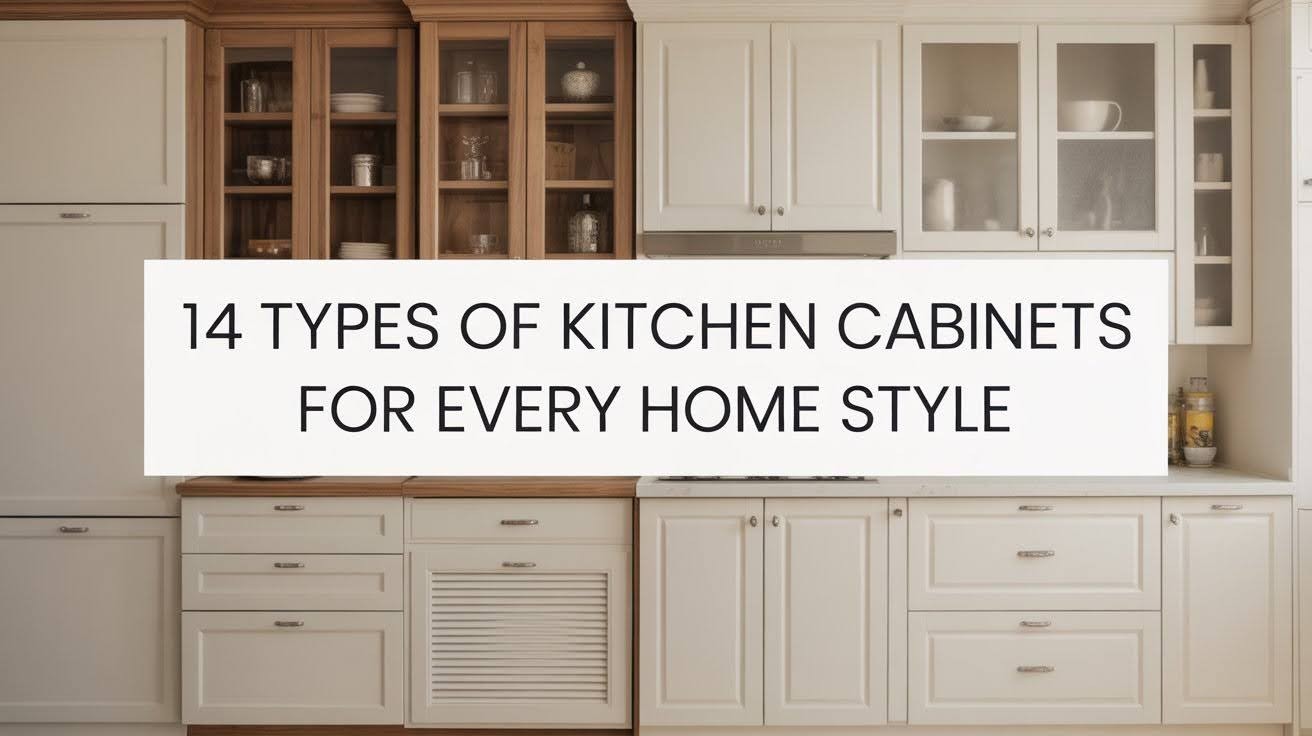
Choosing kitchen cabinets shouldn’t stress you out. I once stood in a showroom, completely lost among dozens of options. That’s why I created this guide to 14 types of kitchen cabinets. I’ll walk you through each style with honest advice.
You’ll see which cabinets match your home and budget. No sales talk, just real information. This guide covers shaker, flat panel, raised panel, and specialty storage solutions. Your cabinet choice affects how your kitchen looks and works.
Some designs offer more storage while others make small kitchens feel bigger. Smart cabinet choices solve problems while looking great. I’ll help you pick the right style for your needs.
What Are the Different Types of Kitchen Cabinets?
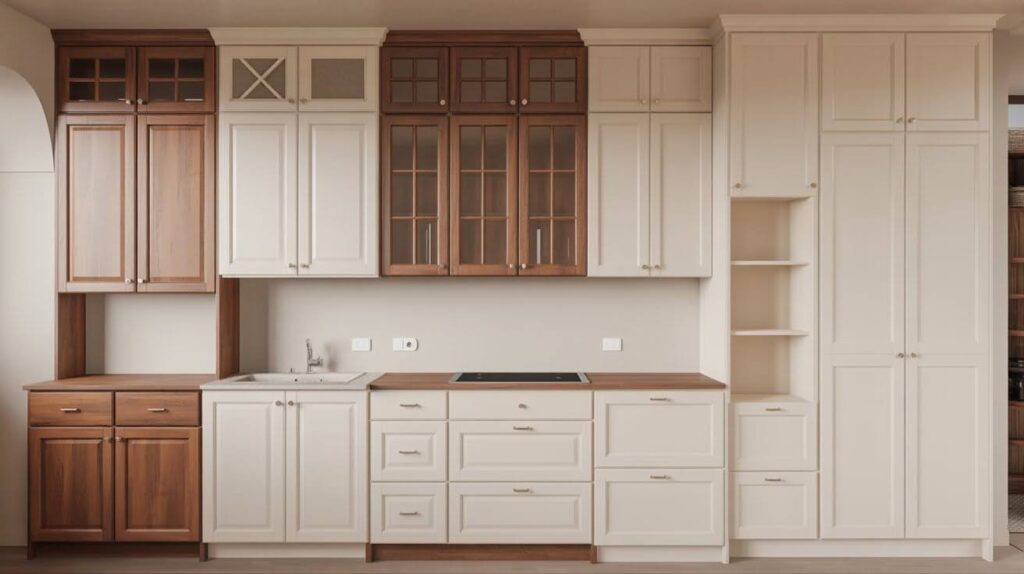
Kitchen cabinets fall into several categories based on design, placement, and purpose. Understanding these distinctions helps you plan a functional and beautiful kitchen.
Cabinet styles refer to door designs like shaker, flat panel, or raised panel. Cabinet types describe their placement and use, such as base, wall, or specialty cabinets. Some cabinets combine both style and function, like glass-front wall cabinets or custom pantry units.
Each option serves specific needs. Your kitchen might need a mix of several types to work efficiently. Let’s look at each one in detail.
Types of Kitchen Cabinets: 14 Options to Consider
From classics to modern innovations, these cabinet options cover every style preference and functional need for your kitchen.
1. Shaker Cabinets
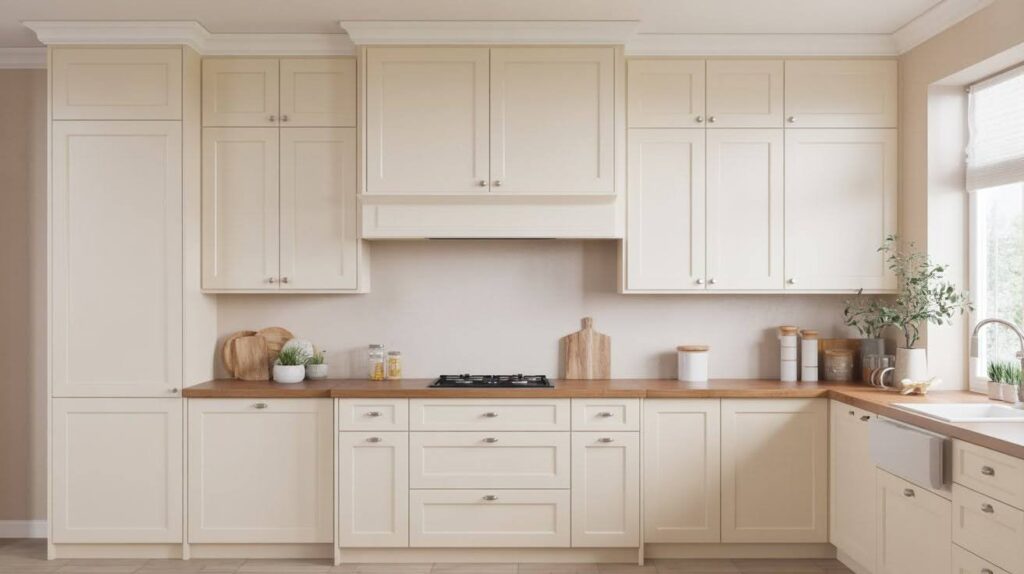
Simple, clean lines define shaker cabinets, making them the most popular choice for kitchens across America today.
Shaker cabinets feature a flat center panel with a simple frame. You’ll notice a recessed center panel surrounded by four flat rails. This style works with almost any hardware and the construction is solid.
These cabinets suit farmhouse, transitional, and contemporary homes. They work in both large and small kitchens. Their versatility makes them safe for any renovation project.
2. Raised Panel Cabinets
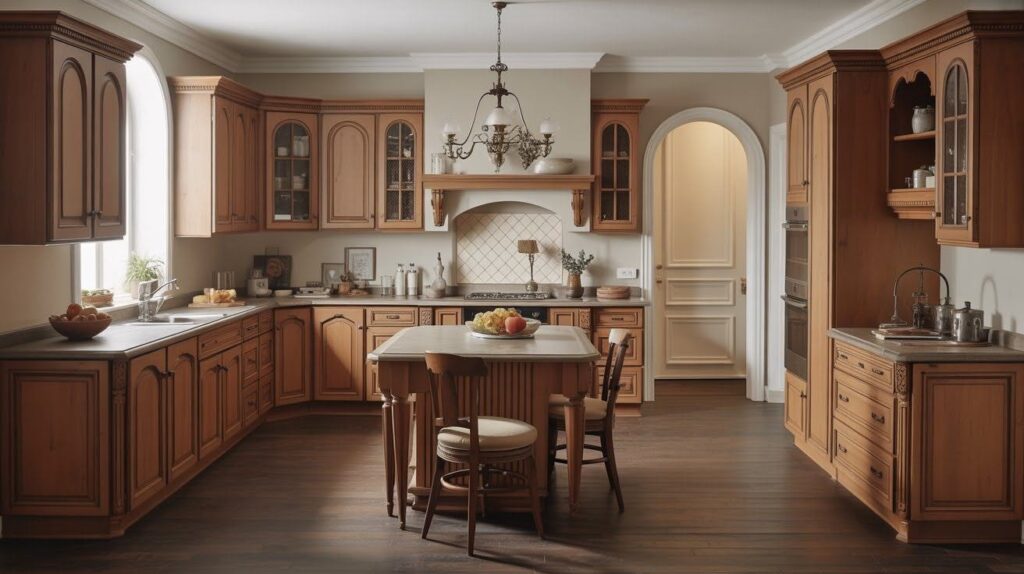
Raised panel cabinets bring depth and dimension through their three-dimensional center panel that creates visual interest.
These cabinets have a center panel that sits higher than the frame. The raised design adds texture and character. The style feels formal and established.
Raised panels come in different profiles from subtle to pronounced. Staining shows off the panel detail beautifully. Painted versions create a softer look.
3. Flat Panel (Slab) Cabinets
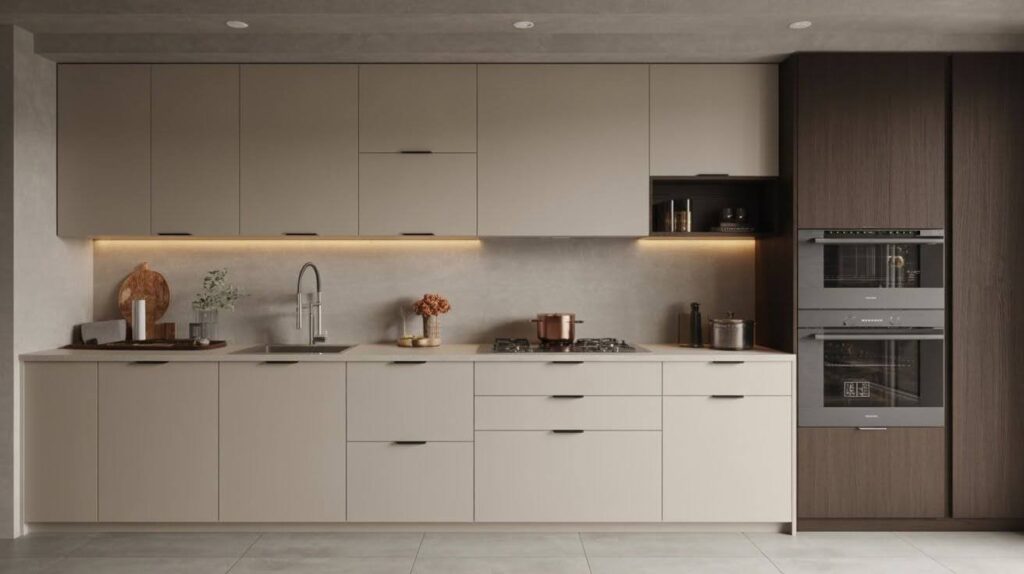
Flat panel cabinets feature smooth, uninterrupted surfaces that create the cleanest, most contemporary look in modern kitchens.
Slab cabinets have no frames or details. Just one flat surface from edge to edge. This creates a sleek appearance and makes spaces feel larger.
You can get flat panels in wood, laminate, acrylic, or thermofoil. High-gloss finishes are popular for ultra-modern looks. The smooth surface is easy to clean.
4. Louvered Cabinets
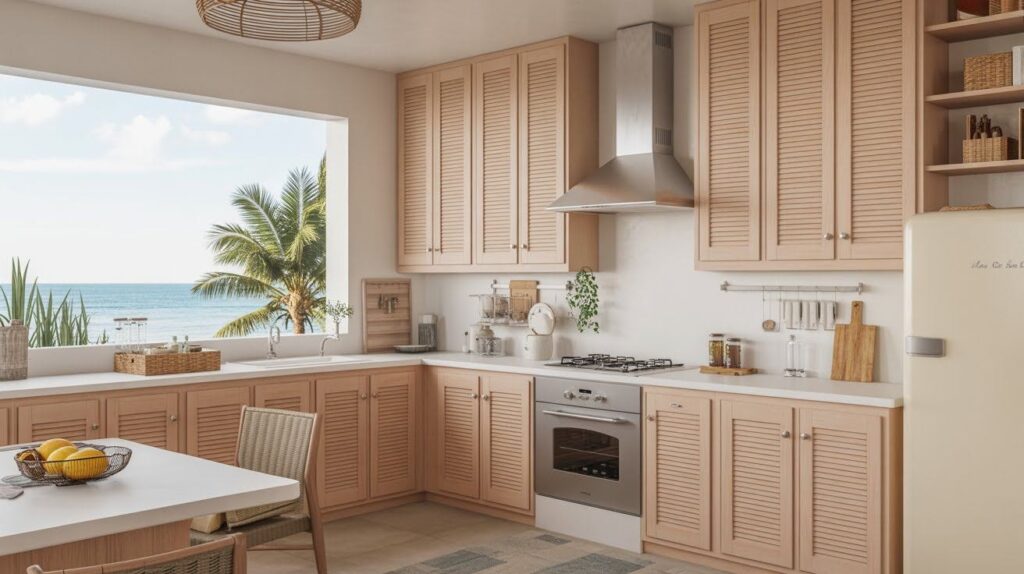
Louvered cabinets showcase horizontal slats that allow air circulation, making them both functional and visually distinctive.
Louvers are horizontal slats set at angles. This creates texture and allows air to pass through. The look is casual and relaxed.
Louvered cabinets suit coastal and tropical home styles. They’re perfect for humid climates. Use them sparingly as full coverage can feel overwhelming.
5. Inset Cabinets
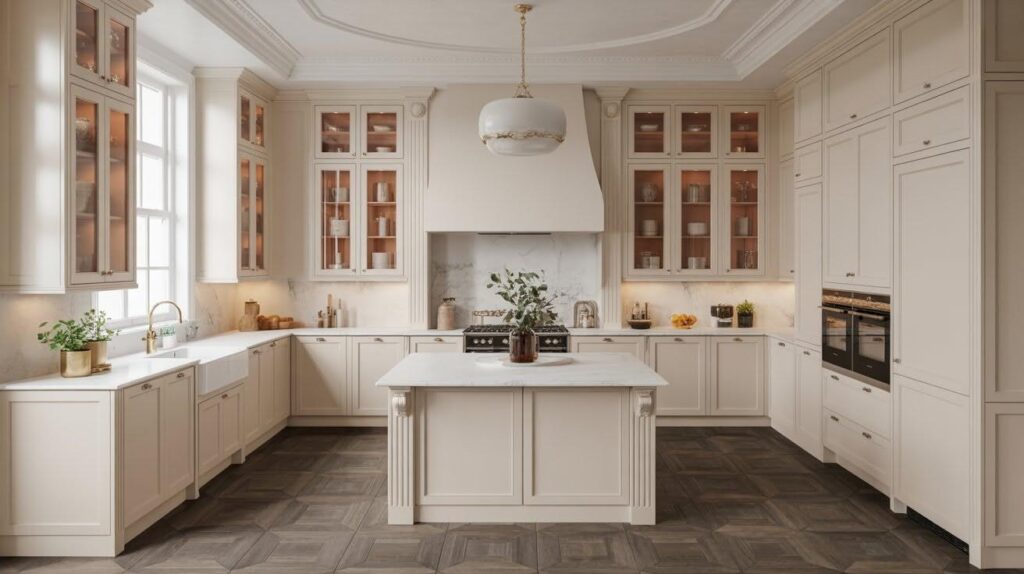
Inset cabinets sit flush within the frame, creating a high-end look that requires skilled craftsmanship and precision.
The cabinet doors fit completely inside the frame. No overlay, just a clean, flush appearance. This requires expert installation and quality materials.
Inset cabinets cost more than standard overlay styles. The labor and precision drive up prices. Customization options are extensive.
6. Beadboard Cabinets
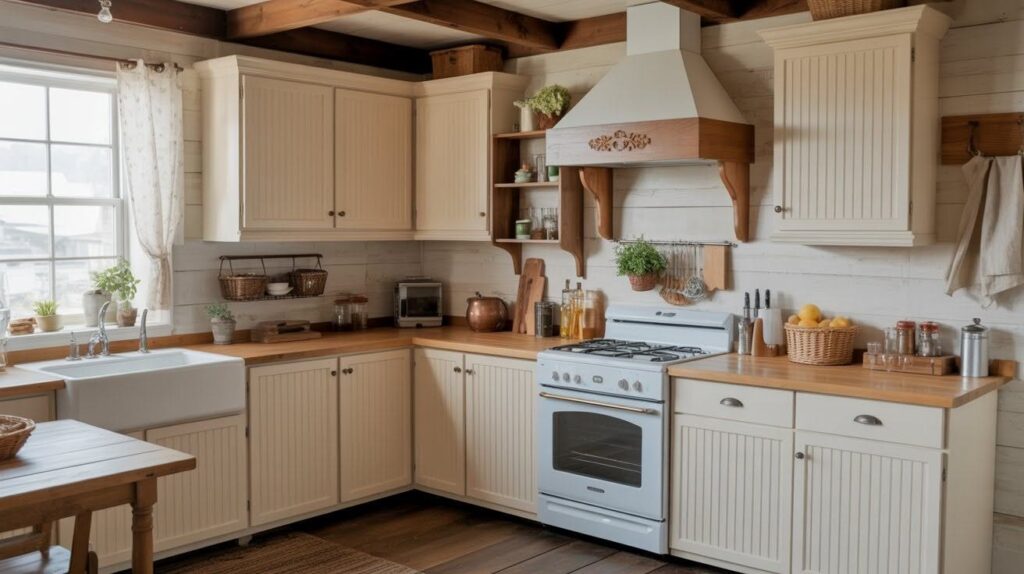
Beadboard cabinets display vertical grooves that bring cottage charm and texture to casual, comfortable kitchen spaces.
Vertical planks with grooves create the beadboard look. This style feels cozy and homey. It works beautifully in farmhouse and cottage kitchens.
The grooves can collect dust and grease. Regular cleaning with a soft brush helps. Painted beadboard is easier to maintain than stained versions.
7. Glass-Front Cabinets
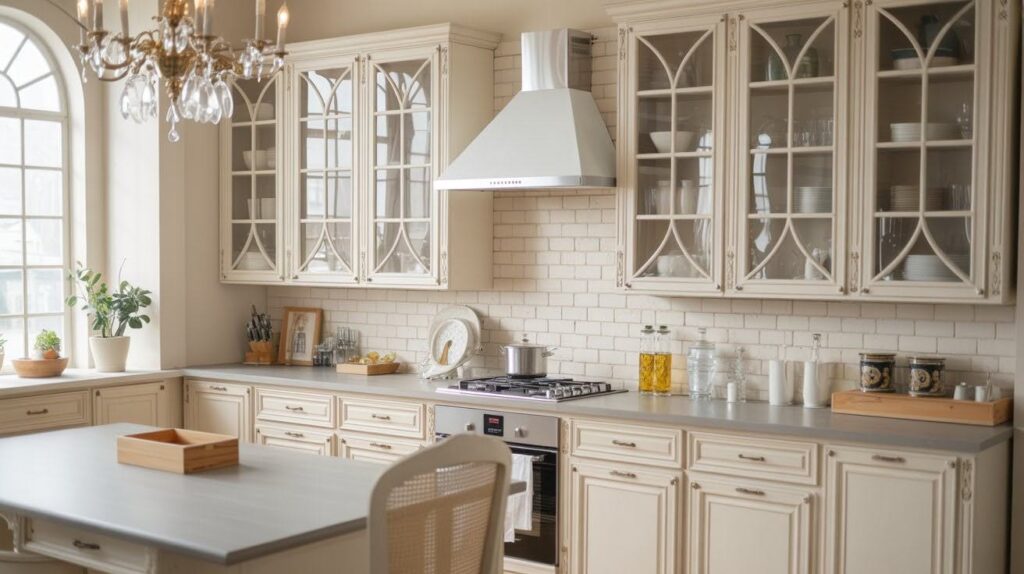
Glass-front cabinets replace solid doors with transparent panels, allowing you to display dishes while adding visual depth.
Clear glass shows everything inside. Frosted or seeded glass obscures contents while letting light through. You can mix glass types throughout your kitchen.
Glass cabinets work well in upper areas near windows. They make small kitchens feel more open. Keep displayed items organized since glass shows everything.
8. Open Shelving Cabinets
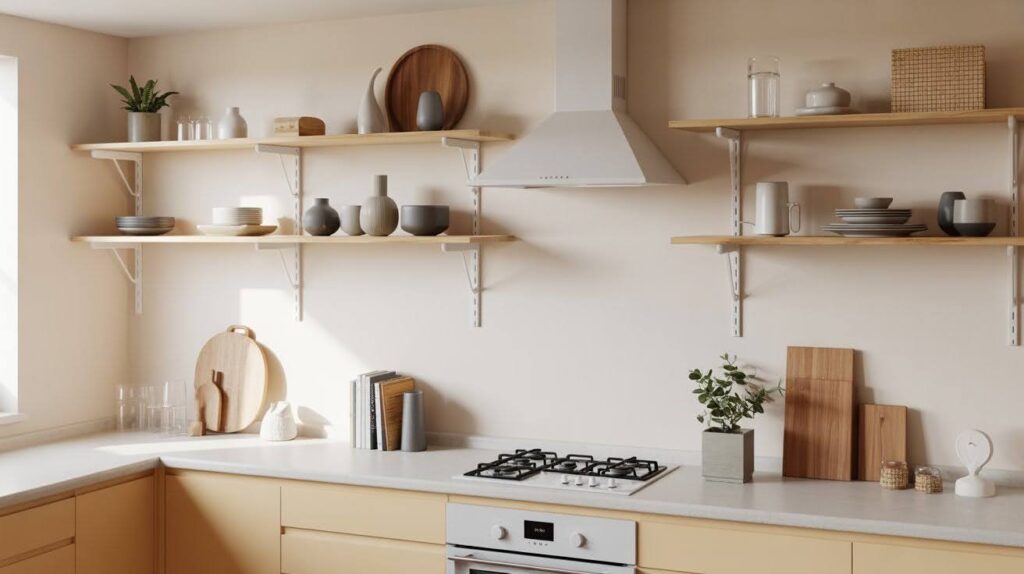
Open shelving removes doors entirely, creating accessible storage that makes small kitchens feel bigger and more inviting.
Open shelves make spaces feel less closed in. You can access items quickly without opening doors. Shelves cost less than cabinets with doors.
Keep frequently used items on open shelves. Group items by color or type for visual appeal. Mix open shelving with closed cabinets for balance.
9. Corner Cabinets
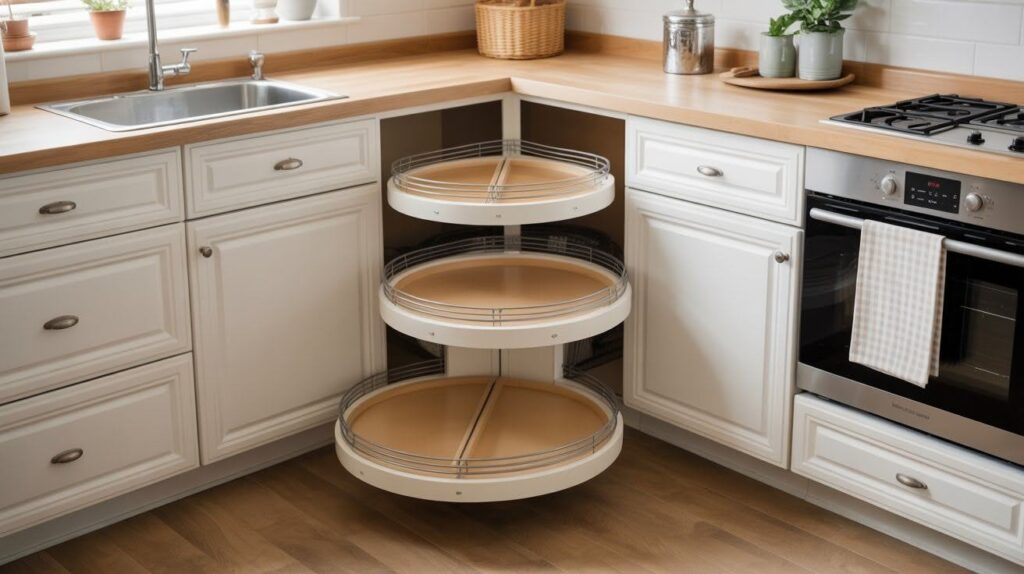
Corner cabinets maximize awkward corner spaces with smart solutions like lazy susans that make storage accessible and functional.
Lazy susans spin to bring items within reach. Blind corner systems use pull-out shelves. Magic corner units fold and swing out.
Corners often become dead zones without proper solutions. The right cabinet system changes that. Measure your corners carefully before buying.
10. Base Cabinets
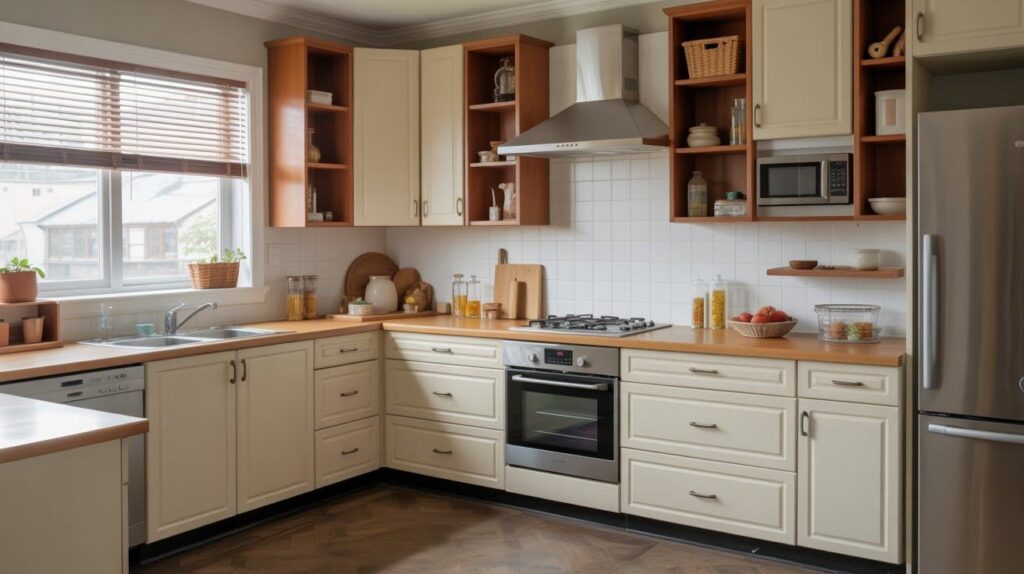
Base cabinets form your kitchen’s foundation, providing primary storage and countertop support with standard measurements for consistency.
Most base cabinets are 24 inches deep and 34.5 inches tall. With countertops, total height reaches 36 inches. Width varies from 9 to 48 inches.
Add pull-out shelves for easy access. Drawer dividers keep utensils organized. Trash pull-outs hide bins from view.
11. Wall Cabinets
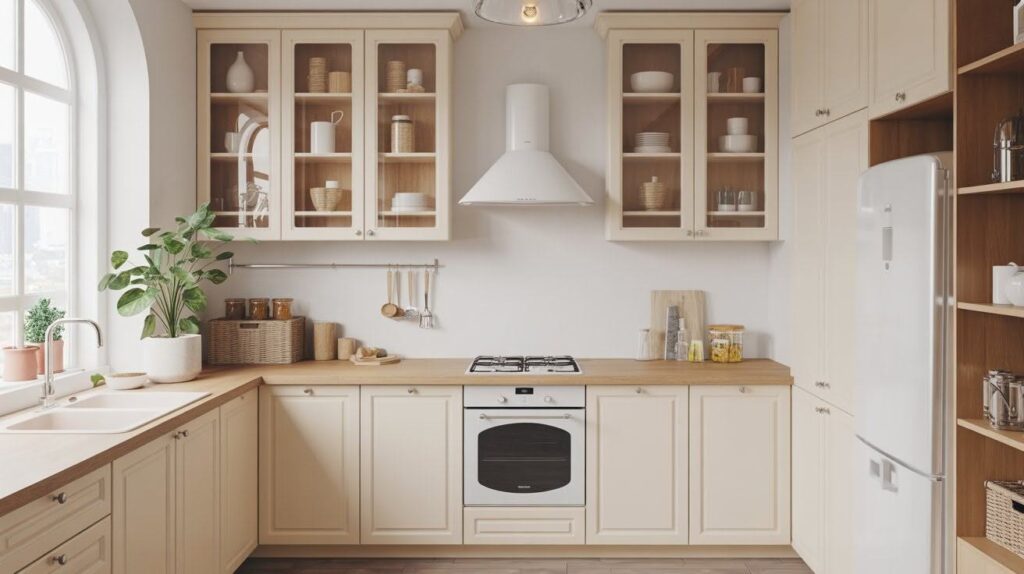
Wall cabinets hang above counters, providing accessible storage while creating vertical visual lines that make ceilings seem higher.
Wall cabinets typically measure 12 inches deep and range from 12 to 42 inches tall. You can stack cabinets to reach the ceiling.
Installing cabinets closer to the ceiling makes rooms feel taller. Paint cabinets the same color as walls to make ceilings feel even higher.
12. Tall Pantry Cabinets
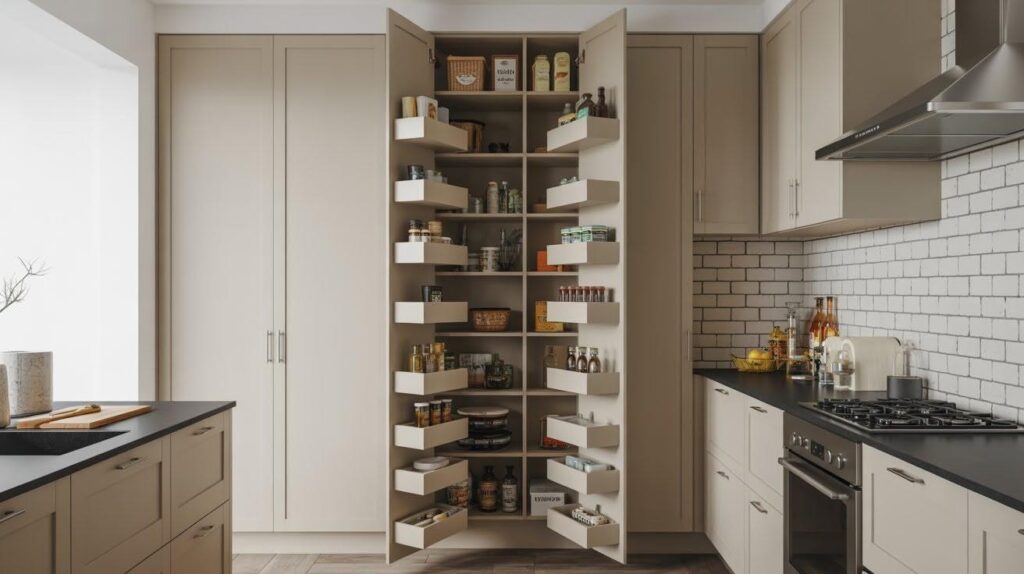
Tall pantry cabinets provide maximum vertical storage for food and kitchen supplies in a compact footprint.
Pantry cabinets stand 84 to 96 inches tall. They hold an enormous amount of food and supplies. Most are 18 to 24 inches deep.
Pull-out shelves make items in the back accessible. Adjustable shelving adapts to your needs. Consider a pantry with drawers at the bottom for heavy items.
13. Specialty Cabinets
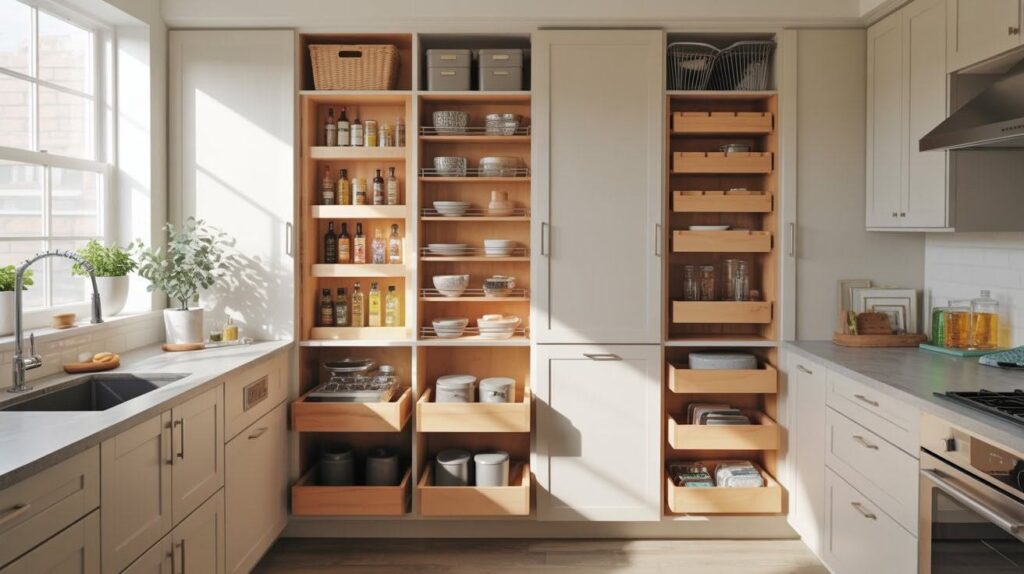
Specialty cabinets solve specific storage problems with focused designs like spice racks and trash pull-outs that improve workflow.
Spice rack cabinets keep seasonings organized. Trash pull-outs hide bins while making disposal easy. Tray dividers store baking sheets vertically.
Place trash pull-outs near prep areas. Put spice racks by the stove. Good cabinet placement reduces steps and makes cooking more efficient.
14. Custom Kitchen Cabinets
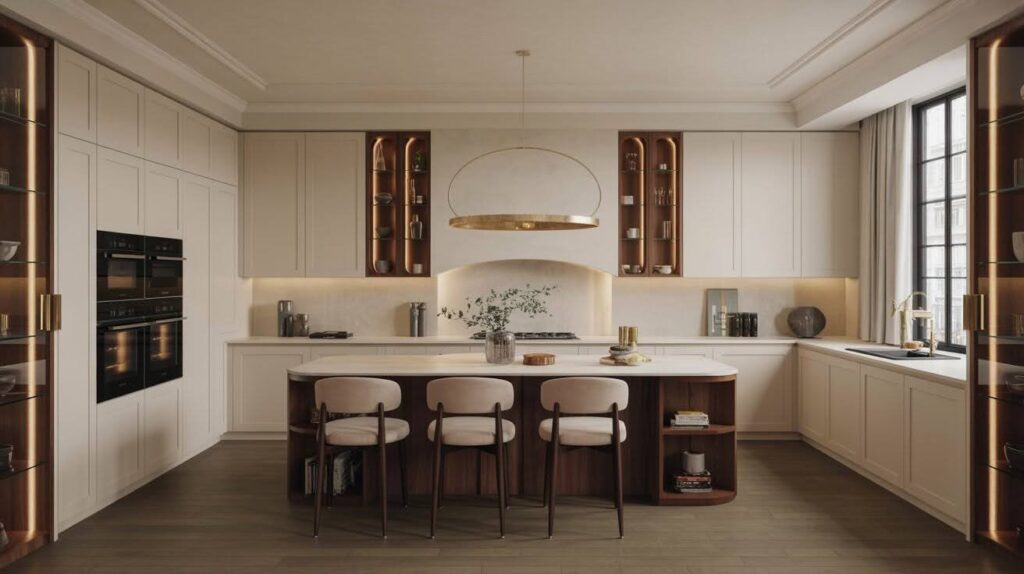
Custom kitchen cabinets are built specifically for your space, offering unlimited design options and perfect measurements throughout.
Custom cabinets fit odd spaces perfectly. They accommodate unusual ceiling heights or wall angles. Choose custom when stock sizes don’t work.
Custom cabinets can match any architectural style. Mix different door styles in one kitchen. Work with a designer to create something special.
How to Choose the Right Type of Kitchen Cabinet
- Picking the right cabinet requires balancing your home’s style, storage requirements, and budget to find the perfect match.
- Match cabinets to your home’s aesthetic. Traditional homes need raised panel or beadboard. Modern homes suit flat panel designs.
- Count your dishes, pots, and food items. Measure large items that need storage.
- Plan for both visible and hidden storage. Balance drawers with shelves.
- Set a realistic budget before shopping. Installation adds 20 to 40 percent to cabinet prices.
- Solid wood lasts longer but costs more. MDF and laminate offer affordability.
- Use free 3D design software to visualize your kitchen before buying. This helps avoid costly mistakes.
Conclusion
The right cabinets make your kitchen work better and look great. Each of these 14 types of kitchen cabinets serves different needs and styles.
I spent months researching cabinets for my own kitchen, and it paid off. I got exactly what I needed, and my kitchen feels perfect now. Take your time with this decision because you’ll live with it for years.
Start by identifying your must-haves. Then visit showrooms to see cabinets in person. Touch the doors, test the hardware, and check construction quality.
Ready to move forward? Share your cabinet plans in the comments below. I’d love to hear what style you’re considering.
Frequently Asked Questions
What is the most popular type of kitchen cabinet?
Shaker cabinets are the most popular choice. Their simple design works with almost any home style and they offer great value for the price.
How much do custom kitchen cabinets cost?
Custom cabinets typically cost $500 to $1,200 per linear foot installed. Stock cabinets run $100 to $300 per linear foot for comparison.
Are flat panel cabinets going out of style?
No, flat panel cabinets remain popular in modern and contemporary kitchens. Their clean lines create a timeless look that continues to appeal to homeowners.
What type of cabinet is easiest to clean?
Flat panel cabinets are easiest to clean because they have smooth, uninterrupted surfaces. There are no grooves or details where grease and dust can accumulate.
Can I mix different cabinet styles in one kitchen?
Yes, mixing cabinet styles adds visual interest. Try glass-front uppers with shaker lowers, or use a different style on your island for contrast.
